Rome with Teenagers: How to Actually Keep Them Engaged
You’ve been to Rome before. You know what it looks like. You know what it feels like. And you know, somewhere in the back of your mind, that dragging a 14-year-old through the Vatican Museums on a Tuesday in August is a different proposition entirely from going with a curious 8-year-old or an enthusiastic adult.
Teenagers are not difficult. They are discerning. They have a finely tuned detector for anything that feels forced, staged or condescending. And they are completely, genuinely capable of having one of the best experiences of their lives in Rome – if you approach it the right way.
After 10 years of taking families through this city, here is what we have learned about teenagers and Rome.
The Mistake Most Families Make
The instinct when travelling with teenagers is to plan more – more sights, more structure, more educational content delivered in an organised way. This is exactly wrong.
Teenagers disengage from passive experiences faster than anyone. Stand them in front of an information panel and read it aloud and you have lost them within ninety seconds. Hand them an audio guide and they will be listening to music through one earbud within three minutes.
What teenagers actually respond to is the unexpected. The fact that shocks. The story that sounds impossible. The moment of genuine discovery that they found themselves – not that was handed to them. Rome has more of these moments per square kilometre than almost anywhere on earth. The challenge is not finding them. The challenge is presenting them in a way that feels like discovery rather than instruction.
Start With the Facts That Sound Impossible
Before you arrive at any monument, brief your teenager on the one fact about it that sounds most improbable. Not the date it was built. Not who commissioned it. The fact that makes them say “wait, what?”
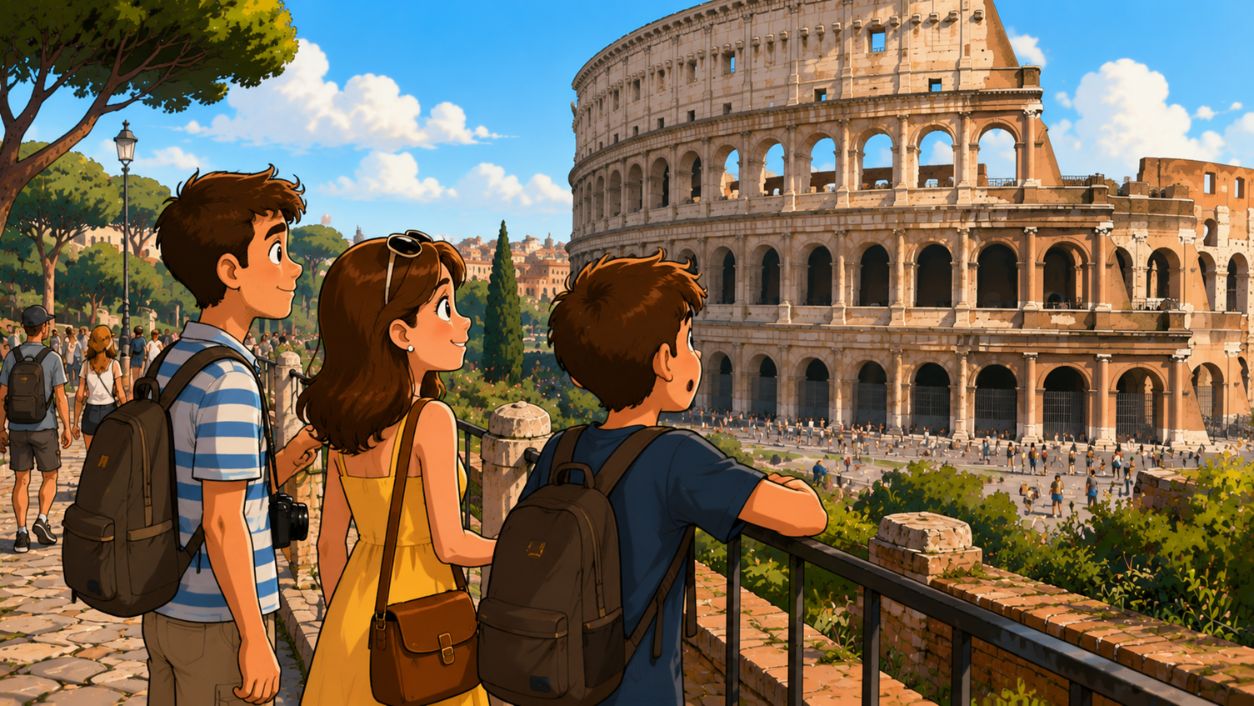
For the Colosseum:
The arena floor could be flooded for naval battles. Inside the Colosseum. They built a waterproofing system, diverted water from a nearby aqueduct and staged full-scale sea battles in front of 50,000 people.
Gladiators were the celebrities of their age. Women left their husbands for them. The Roman poet Juvenal described one famous gladiator as scarred, battered, with a bump on his nose from his helmet – and yet a senator’s wife abandoned everything for him.
There were 28 secret elevators under the arena floor operated by rope and pulley. Gladiators and animals appeared from trapdoors without warning. The crowd never knew what was coming.
For the Vatican:
Michelangelo hated the commission. He considered himself a sculptor, not a painter, and spent four years lying on his back on scaffolding complaining about it in letters and poetry. He nearly went blind from the paint dripping into his eyes.
He also hid things in the ceiling that the Pope never noticed. The arrangement of figures in certain panels mirrors anatomical drawings of the human brain and spinal column – deliberate, concealed, and not discovered for centuries.
The Vatican sits on one of the largest ancient Roman cemeteries in history. The bones of millions of people lie directly beneath St Peter’s Square.
For the Pantheon:
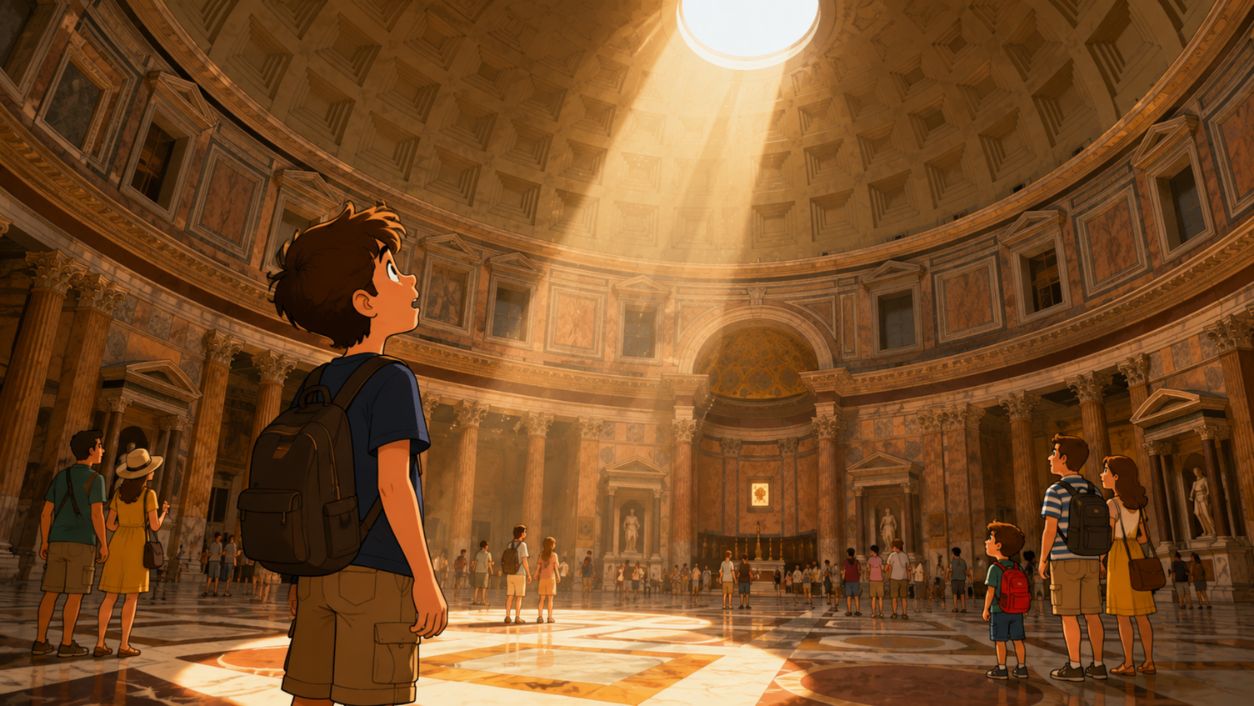
The dome is a perfect sphere. If you placed a ball the exact size of the interior inside the building, it would simultaneously touch the floor and the opening at the top. The Romans built this in 125 AD without computers, without modern engineering tools and without a single crack appearing in nearly two thousand years.
Give Them a Mission, Not a Tour
The single most effective thing you can do with a teenager in Rome is give them a specific thing to find – not a general thing to look at.
“Look at the Sistine Chapel ceiling” produces glazed eyes and a request to find the café.
“Find the hidden anatomical figure that Michelangelo concealed in the ceiling without the Pope noticing” produces a teenager who spends forty minutes with their neck craned upward and refuses to leave until they’ve found it.
The difference is agency. One is passive. One is a mission.
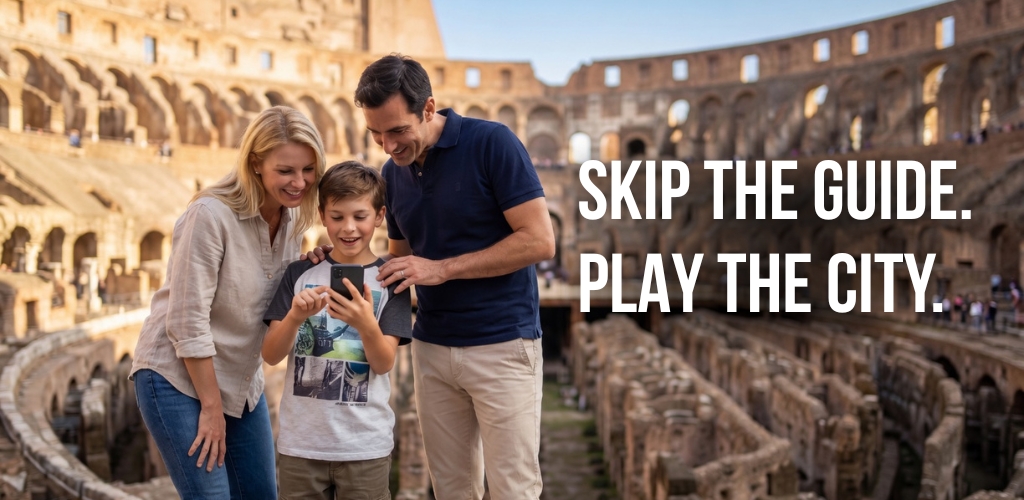
This is precisely the principle behind LooksArt – and it works as well with teenagers as it does with younger children, just for different reasons. Younger children love the characters and the stories. Teenagers love the mystery and the genuine discovery.
The Colosseum adventure includes real historical details about gladiator culture that most adults have never encountered. The Vatican adventure includes the hidden symbols in the Sistine Chapel and the story of what Michelangelo actually thought about the commission. These are not simplified for children – they are stories that genuinely surprise adults who know their history.
The Neighbourhoods Teenagers Actually Love
Here is something that most Rome guides for families do not tell you: teenagers often have a better time in the neighbourhoods than at the monuments.
The monuments are magnificent. They are also, from a teenager’s perspective, things you look at while someone explains things at you. The neighbourhoods are places where things actually happen.
Trastevere:
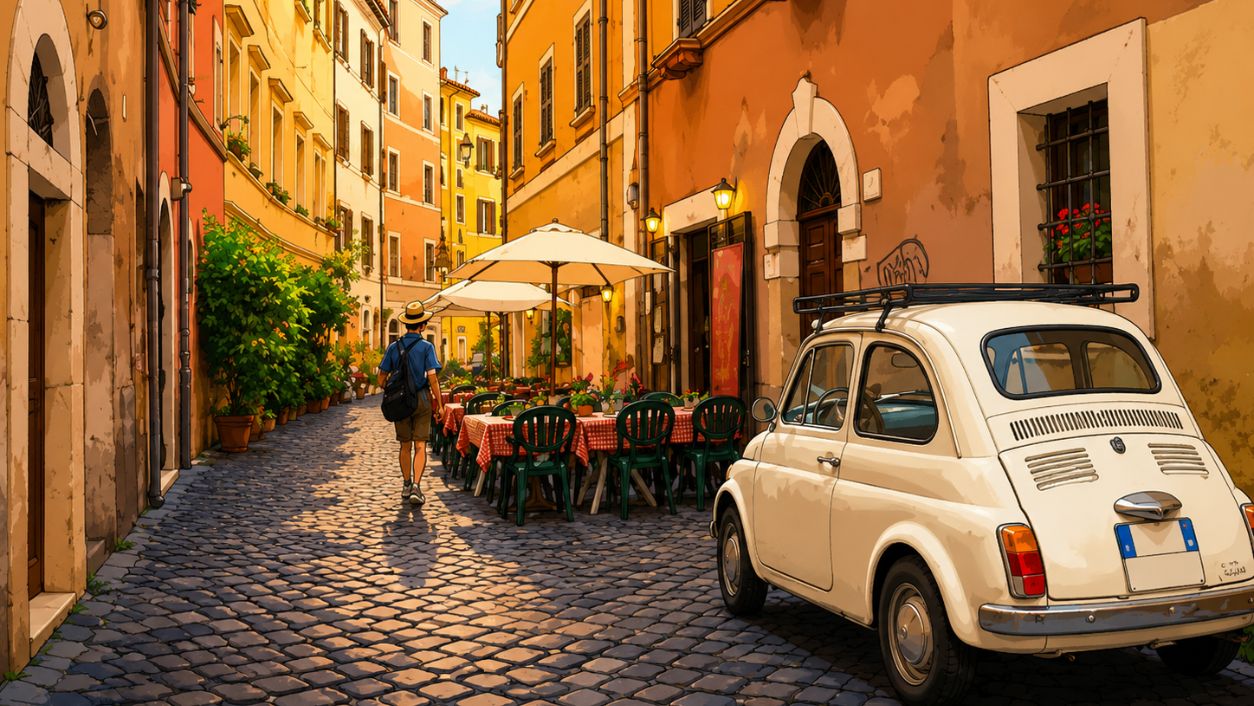
Rome’s most atmospheric neighbourhood and genuinely one of the most beautiful urban environments in the world. Narrow cobblestone streets, outdoor restaurants, street musicians, independent shops. In the evening it fills with young Romans and the energy is completely different from the tourist centre.
For teenagers: the street food, the atmosphere, the sense of being somewhere real rather than somewhere curated for visitors. Trastevere feels like Rome the way Romans actually live it.
Testaccio
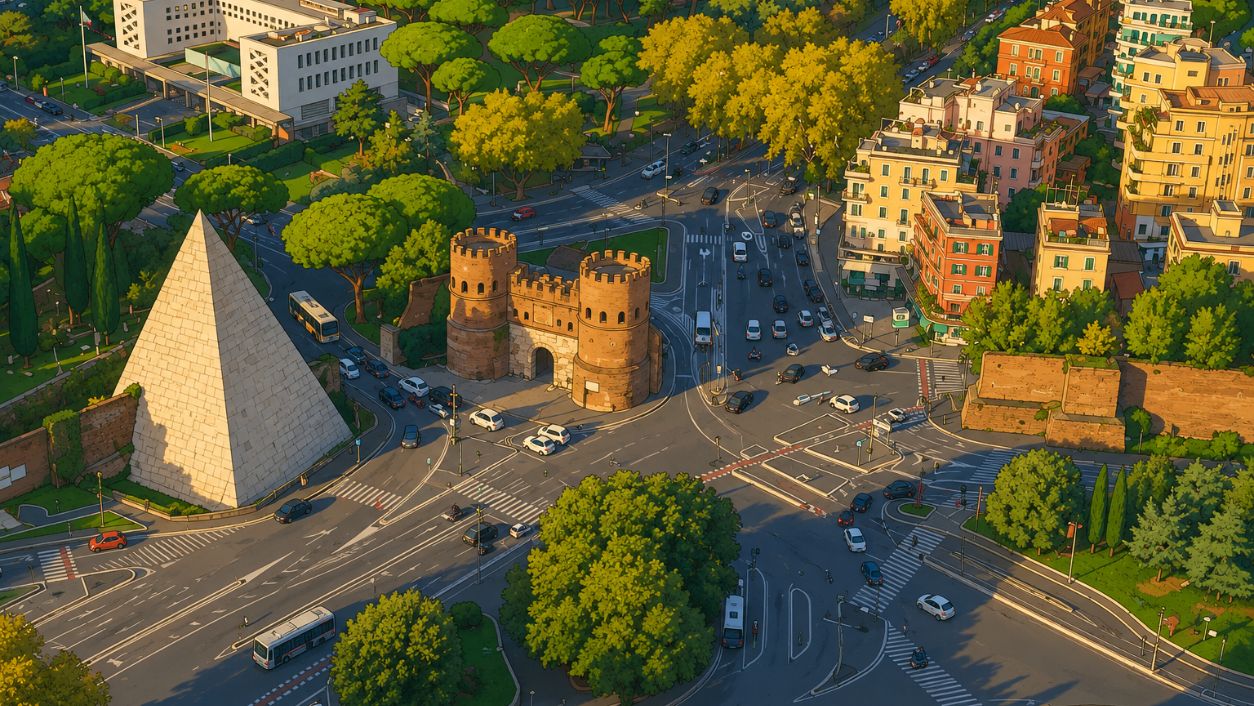
The most authentic working neighbourhood in central Rome. The Testaccio Market is a genuine food market – not a tourist market – where locals shop every morning. The neighbourhood has some of the best street food in the city: supplì, pizza al taglio, porchetta sandwiches.
For teenagers: Testaccio is where Romans eat. The prices are local prices. The food is the food locals actually choose when they have options.
Pigneto
Further from the centre and rarely visited by tourists. Rome’s creative neighbourhood – street art, independent cafés, a genuinely young local population. If your teenager is interested in contemporary culture rather than ancient history, Pigneto shows a side of Rome that most visitors never see.
The Street Food Conversation
Food is one of the most reliable ways to engage a teenager in any culture. And Rome’s street food is genuinely extraordinary – not in a performed, Instagram-ready way, but in a this-is-what-Romans-have-eaten-for-centuries way.
Supplì: fried rice balls with a molten mozzarella centre. Invented in Rome, available everywhere, eaten standing up in thirty seconds. The best ones come from Testaccio Market or Supplì Roma on Via di San Francesco a Ripa.
Pizza al taglio: pizza by the slice, sold by weight, eaten folded in half while walking. This is not a tourist adaptation – this is Roman fast food, unchanged for decades. The best in the city is a consistent argument among Romans, which means the conversation itself is worth having.
Carciofi alla giudia: Jewish-style deep-fried artichokes, originating in Rome’s ancient Jewish quarter. Crispy on the outside, soft inside, unlike anything available outside Italy. Worth the walk to the Ghetto neighbourhood specifically to try them.
The conversation around food – where it comes from, why this neighbourhood makes it differently, what the ingredient actually is – is one of the most natural ways to talk about Roman history without it feeling like a history lesson. The Jewish artichokes are a doorway into two thousand years of Roman Jewish history. The supplì connects to the neighbourhood traditions of working-class Rome. The pizza connects to the wheat trade that made Rome the capital of an empire.
What Teenagers Remember
We have noticed, over many years of family tours, that the things teenagers remember from Rome are almost never the things on the official itinerary.
They remember the moment they found the hidden symbol in the Sistine Chapel – not the ceiling itself.
They remember the supplì from the market stall – not the restaurant where everyone sat down for lunch.
They remember the street cat sleeping on a two-thousand-year-old wall in the Forum – not the information panel explaining when the wall was built.
They remember the feeling of Trastevere at 9pm – not the opening hours of the monument they visited at 10am.
This is not an argument against the monuments. The Colosseum is extraordinary. The Vatican is genuinely unlike anything else on earth. But the monuments are the structure around which the real experiences happen – and for teenagers, the real experiences are almost always the unexpected ones.
Give them the facts that sound impossible. Give them a mission to complete. Take them to the neighbourhoods where Romans actually live. Let them choose the street food. Let them lead occasionally.
Rome will do the rest.
LooksArt for Teenagers
Our self-guided family adventures are designed for children aged 6-14 – which means teenagers at the upper end of this range are exactly the audience who engages most deeply with the content.
The Colosseum Secrets adventure includes the real history of gladiator culture – the celebrity status, the underground elevators, the naval battles – delivered through missions and discovery rather than information panels. Teenagers who complete it consistently tell us they learned things they had never encountered anywhere else.
The Vatican Secrets adventure includes the hidden symbols in the Sistine Chapel, the real story of Michelangelo’s relationship with the commission and details about the Vatican that most adult visitors never discover.
Both work fully offline – no WiFi, no roaming. Both are available in 6 languages. €29 for the whole family.
“What I hear, I forget. What I do, I understand.” – Aristotle
For teenagers, this is not just a principle. It is the difference between a trip they remember and one they forget.
🗺️ GET OUR FREE SMART FAMILY MAP