Rome for Curious Kids: 10 Questions Your Child Will Probably Ask
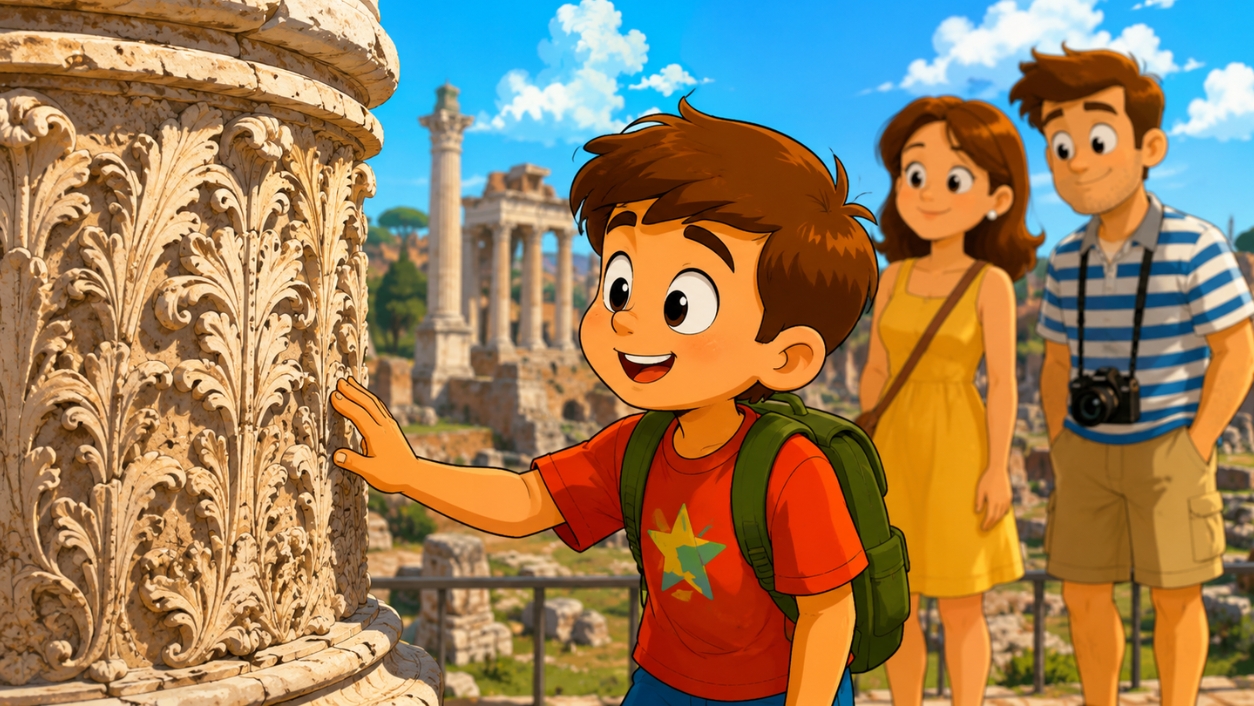
Children ask the best questions in Rome – usually the ones adults forget to ask.
“Why is everything so old?” “Did people really die here?” “Why does the Pope live in this city?” These aren’t simple questions, and the honest answers are more interesting than most guidebooks let on.
After 10 years of walking through Rome with families, here are the ten questions we hear most often – and the answers that actually satisfy a curious 8 year old.
1. "Why is everything so old?"
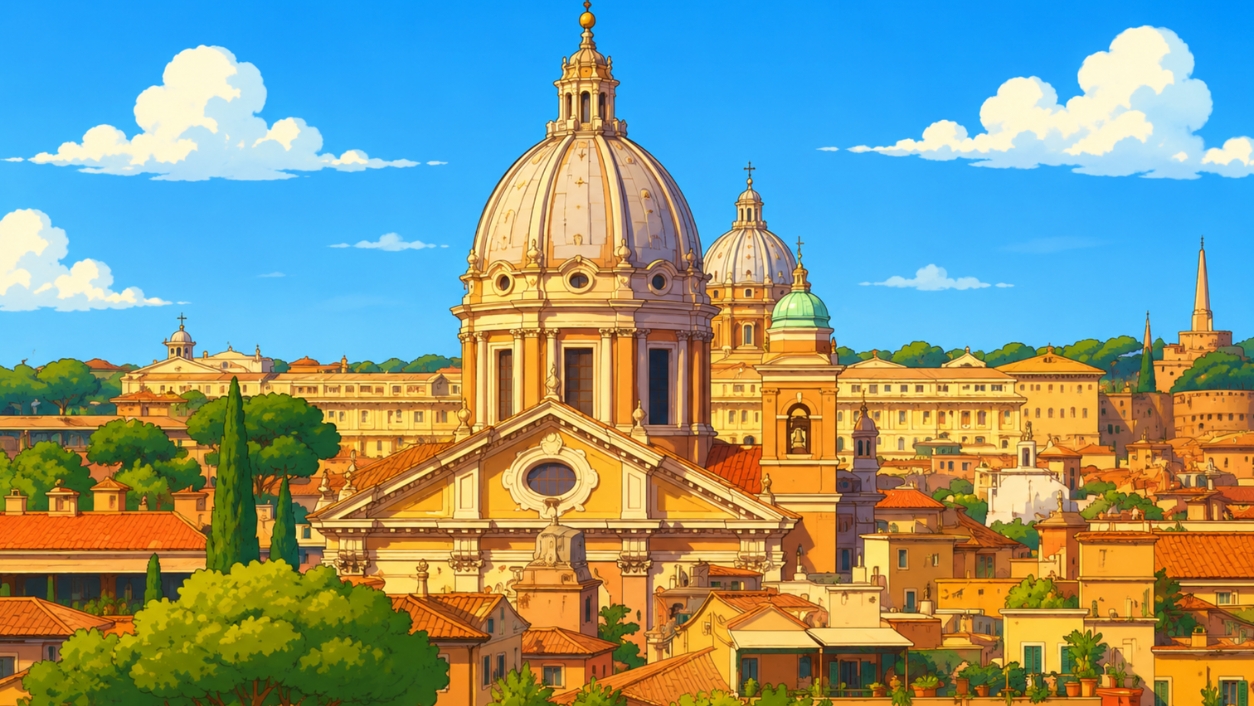
Because Rome has been continuously inhabited for roughly 2,800 years, and almost nobody ever tore the old stuff down completely. Instead, each generation built on top of what came before – literally. Many of Rome’s modern streets sit several metres above ancient Roman ground level, because centuries of rubble, rebuilding and flooding gradually raised the entire city.
The honest answer kids love: Rome didn’t get old by accident. It got old because everyone who lived here kept adding to it instead of starting over.
2. "Did gladiators really fight here?"
Yes – and the reality was wilder than most movies show. The Colosseum hosted gladiator combat, but also animal hunts, public executions, and – this is the detail that gets every child’s attention – full-scale naval battles, with the arena floor flooded using water diverted from a nearby aqueduct.
Most fights didn’t end in death; a skilled, trained gladiator was too valuable to kill off casually. Some of the best fighters were genuine celebrities, with crowds chanting their names.
3. "Why are there so many churches?"
Rome has roughly 900 churches within the city – more per square kilometre than almost anywhere else on Earth. This is because Rome has been the centre of the Catholic Church for around 1,700 years, and for centuries, building or funding a church was one of the most prestigious things a wealthy family, guild or pope could do.
Tell a child this and the constant churches stop feeling repetitive – they become evidence of just how seriously this city has taken religion for a very, very long time.
4. "Why are there fountains everywhere?"
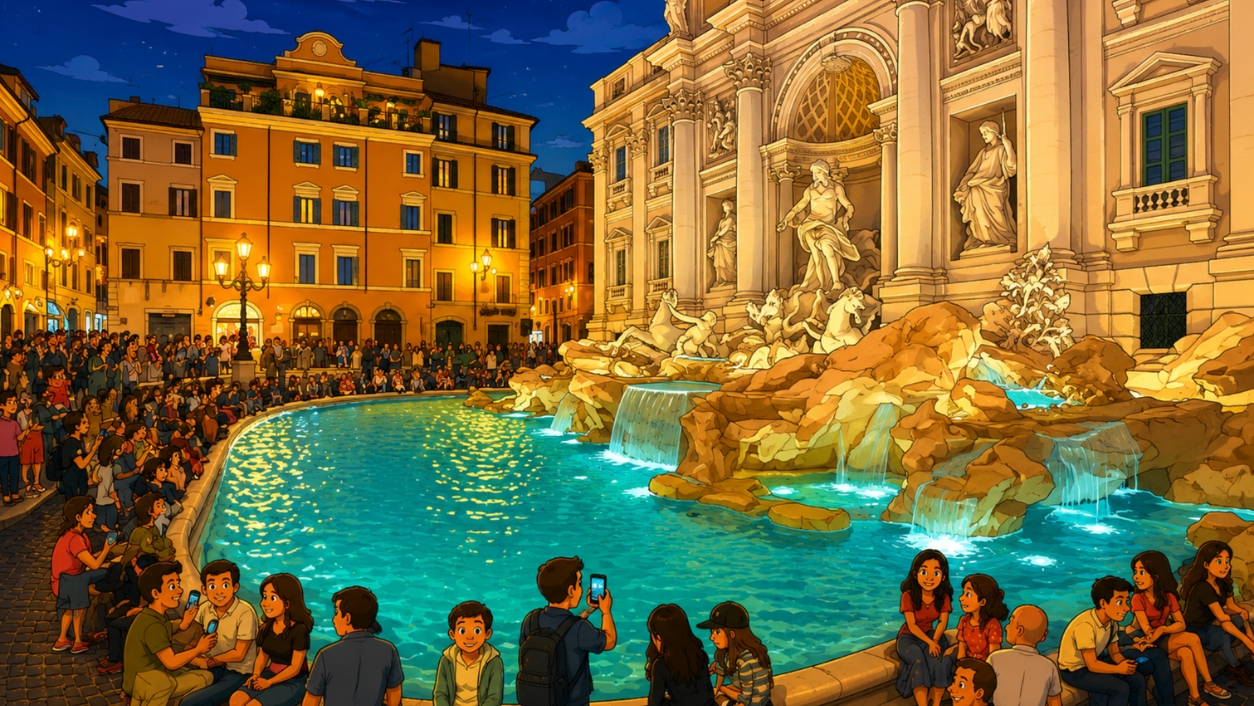
Because Rome built one of the ancient world’s most advanced water systems – aqueducts carrying fresh water from the surrounding hills into the city – and that tradition never really stopped. Today, Rome has over 2,500 small drinking fountains called nasoni, plus dozens of grand monumental ones like the Trevi Fountain.
The practical answer kids appreciate most: free, drinkable water, literally on every corner. Bring a bottle and use them constantly.
5. "Why does the Pope live here?"
Because Vatican City – where the Pope lives – is technically its own independent country, located entirely inside Rome. It’s the smallest country in the world, smaller than most public parks, with its own postal service, its own tiny army, and its own laws.
The detail that makes kids’ eyes widen: you can walk from one country into another country in Rome simply by crossing a painted line in St Peter’s Square.
6. "Why do people throw coins into Trevi Fountain?"
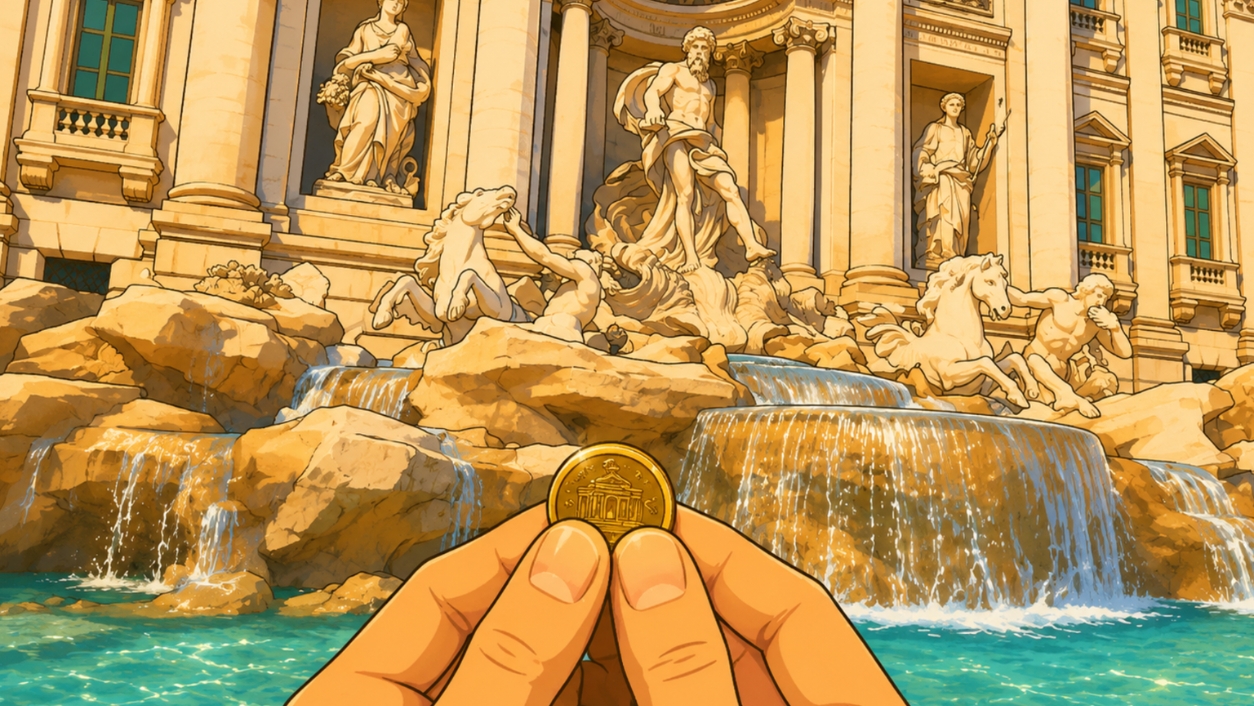
Tradition holds that throwing a coin into the Trevi Fountain – over your shoulder, with your back turned – guarantees you’ll return to Rome one day. Tourists throw in roughly €3,000 worth of coins every single day, and all of it is collected and donated to charity, supporting families in need across the city.
A good fact to add for older kids: the proper technique is right hand, left shoulder, back to the fountain. Anything else, according to the tradition, doesn’t count.
7. "Did people really live in the Colosseum's basement?"
Not people – but plenty happened underground. Beneath the arena floor was a network of tunnels and chambers called the hypogeum, where gladiators, animals and scenery waited before being lifted into the arena through roughly 28 trapdoor elevators, operated entirely by rope and human muscle. The audience never knew what was coming next.
8. "Why are some buildings broken and others are fine?"
Time, earthquakes, fires, looting, and – frequently – recycling. For centuries, Romans took stone and marble from older ruined buildings to construct new ones; entire churches and palaces are partly built from recycled ancient Rome. What survives intact, like the Pantheon, often does so because it was continuously used for something – in the Pantheon’s case, it became a church, which protected it from being dismantled.
9. "Why does the floor look dirty in that one room?" (Vatican Museums)
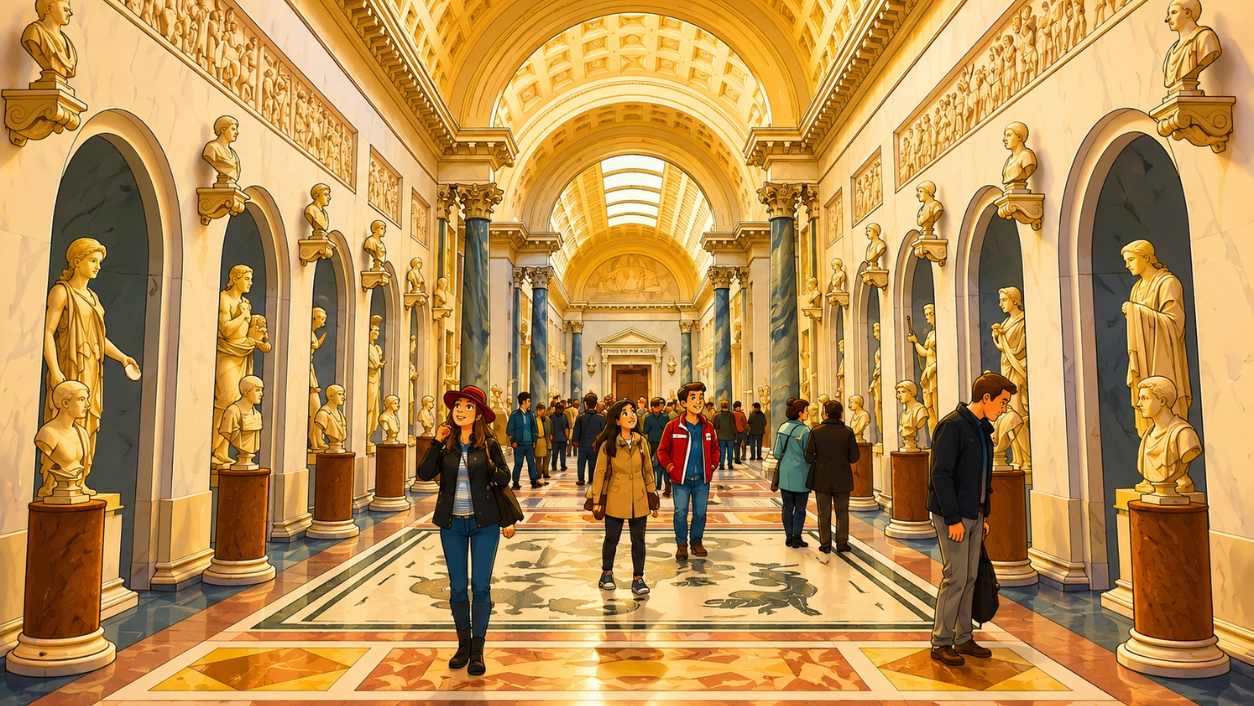
This is one of our favourites. In a lesser-visited section of the Vatican Museums, there’s a mosaic floor deliberately designed to look messy – crumbs, bones, even a small carved mouse, permanently set in stone. Wealthy ancient Romans actually decorated dining room floors this way on purpose. It’s not dirt. It’s art that’s pretending to be dirt, which is a concept most children find immediately delightful.
10. "Why do we have to keep walking? Are we there yet?"
Honestly – because Rome’s best moments are rarely right next to each other, and the walk between them is part of what makes the city work. But the real fix for this question isn’t a shorter itinerary. It’s giving your child a reason to walk that isn’t “because we have to.”
This is exactly what we built LooksArt for – missions and stories that turn the walk itself into part of the adventure, so the question “are we there yet” gets replaced with “what happens next?”
“What I hear, I forget. What I do, I understand.” – Aristotle
Children ask the best questions in Rome. The job isn’t to have a perfect answer ready for all of them – it’s to make the city interesting enough that they keep asking.
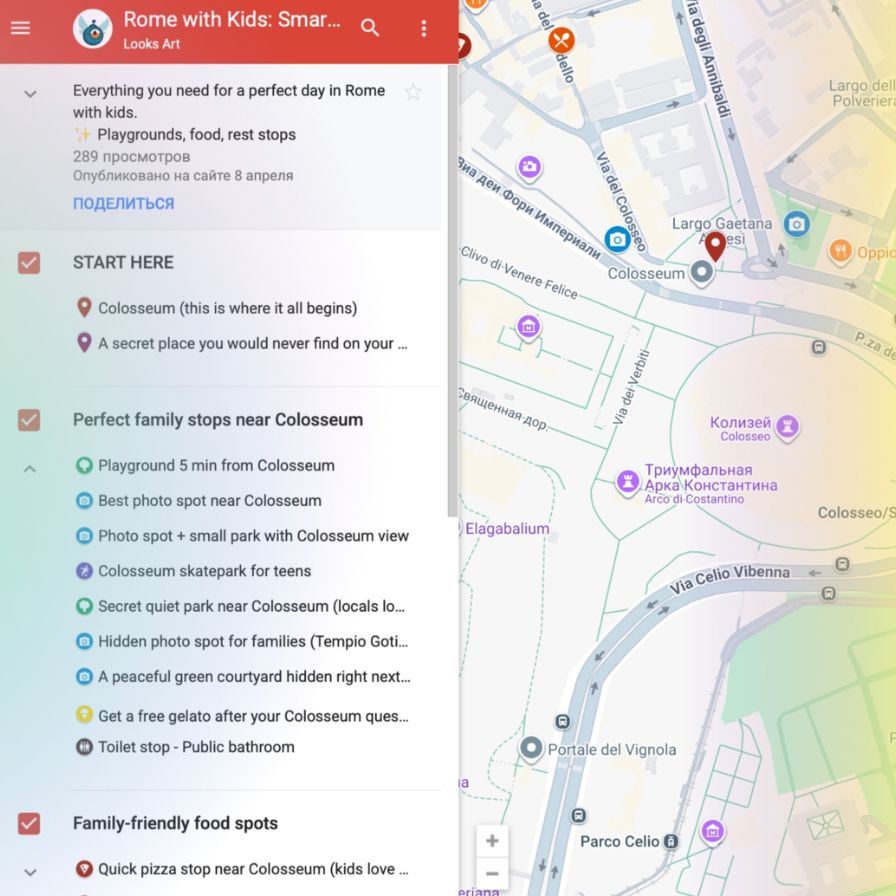
🗺️ GET OUR FREE SMART FAMILY MAP