
Rome with Kids: 7 Small Tricks That Make the Trip Much Easier
By Marina Sorokoumova, Founder of LooksArt & WowItaly
I want to start with a confession.
After 10 years of taking families through Rome, I still see the same thing happen on almost every first day. A family arrives full of excitement. They’ve planned for months. They have a list. They have a schedule. And by 2pm, someone is crying – and it’s not always the child.
Rome is not a difficult city. But it is an unforgiving one when you approach it the wrong way. The heat, the crowds, the cobblestones, the sheer scale of everything – it adds up fast. And when you’re managing all of that with a child who is tired, hungry, or overwhelmed, the most beautiful city in the world starts to feel like a very expensive mistake.
These seven tricks won’t make your trip perfect. Nothing will. But they will give you the conditions for a day that actually works – a day where your child is engaged, where you’re not constantly firefighting, and where Rome gets to do what it does best.
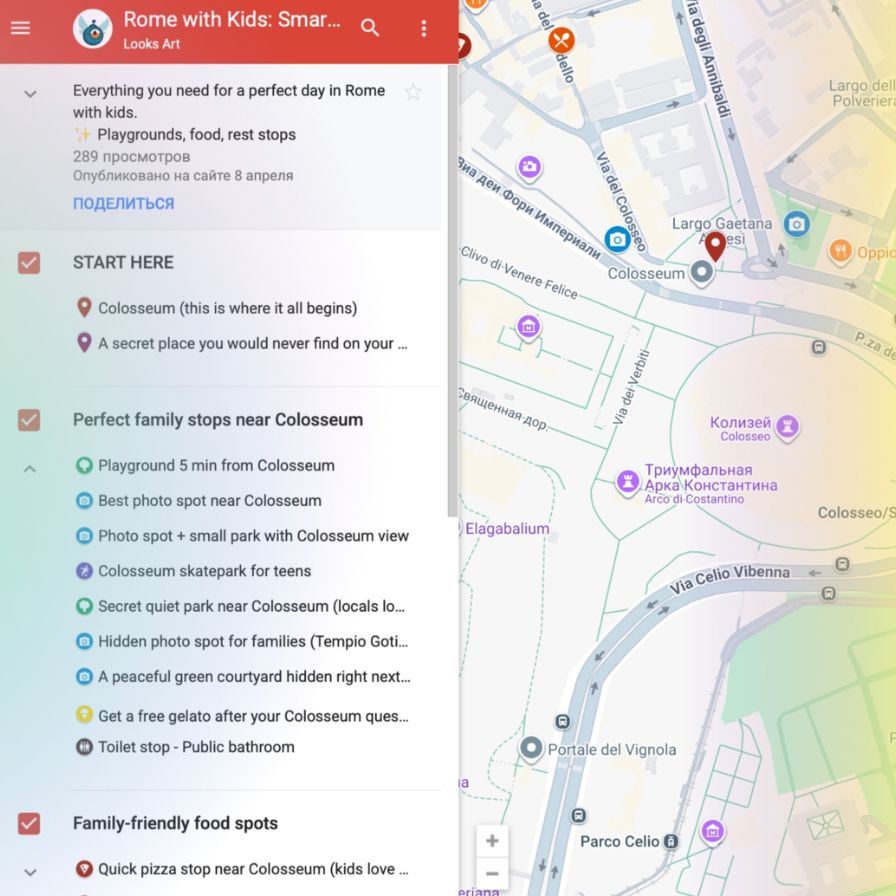
🗺️ Want this map on your phone? Get our free Smart Family Map!
1. Tell your child the plan the night before - with a real reward at the end.
This is the trick that costs nothing and makes the biggest difference. And almost nobody does it.
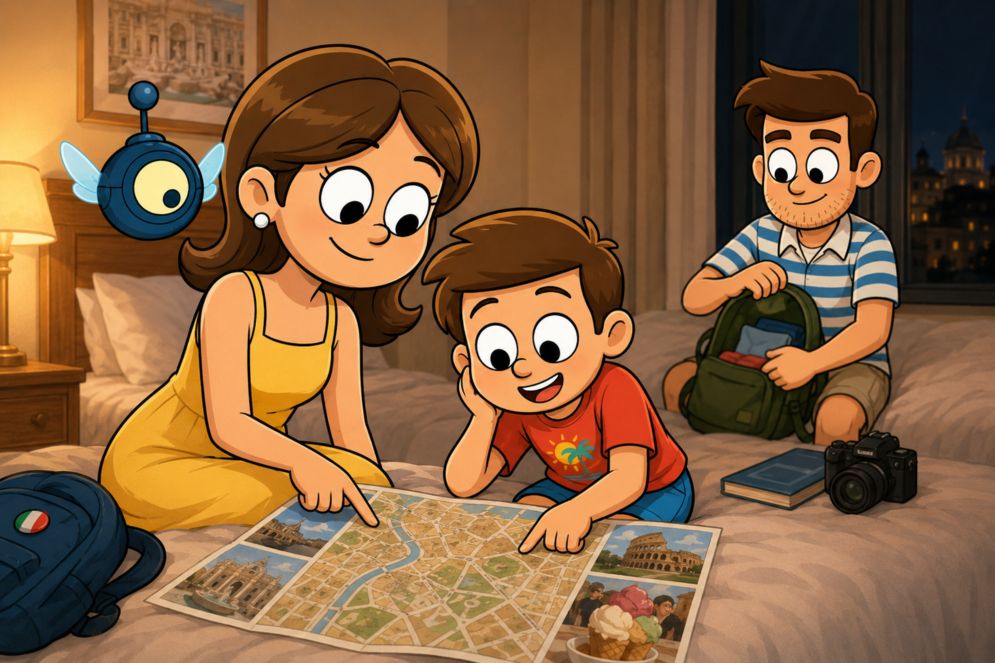
The night before any big visit, sit down with your child and walk them through the next day. Not every detail – just the shape of it. Where you’re going. What they’ll see. How long you’ll be there. And crucially: what happens at the end.
Children who don’t know what’s coming resist everything. Not because they’re difficult – because uncertainty is uncomfortable, and discomfort in children comes out as resistance. When a child knows the plan, they can work with it. When they don’t, they work against it.
The reward matters more than most parents realise. “We’ll get something nice after” doesn’t work. “We’re going to that specific gelateria we walked past yesterday, the one with the pistachio” – that works. A specific, named, anticipated reward gives your child a psychological finish line. Something concrete to move toward when they’re flagging at minute 45.
I remember one family in particular. A mum, a dad, two boys – seven and ten. They arrived at the Colosseum at 11:30am in July. No breakfast. Large backpacks. The younger one had already asked three times when they were going home, and they hadn’t even reached the entrance yet.
By the time they got through security – 20 minutes in the queue, bags unpacked and repacked – the older boy was sitting on the ground refusing to move. The mum looked at me and said: “We saved up for two years for this trip.”
I’ve thought about that moment many times since. Because nothing about their day was unfixable. They just didn’t know the small things. The timing. The breakfast. The fifteen minutes. The plan told to the kids the night before.
That family is part of why I built LooksArt. And it’s why I’m writing this.
Before any big day in Rome, take ten minutes the evening before. Show your child a photo of where you’re going. Tell them one interesting thing they’ll discover there. And name the reward. Specifically. By name.
It costs nothing. It changes everything.
2. Arrive everywhere 15 minutes before you think you need to.
Rome rewards the relaxed and punishes the rushed. I’ve watched this play out hundreds of times.
The Colosseum has full airport-style security at the entrance. Bags go through a scanner. Larger bags sometimes get opened. On busy days – and most days between April and October are busy – this queue alone can take 10 to 15 minutes. If your entry slot is at 10am and you arrive at 9:58, you are already late. You will start your day stressed. And stress in a parent transfers to children faster than almost anything else.
The Pantheon has queues that appear without warning. The Vatican has a security line that can stretch around the block. Every major sight in Rome has some form of waiting built into the arrival experience.
Build 15 minutes of buffer into every visit. Not as a pessimistic assumption – as a gift to yourself. Those 15 minutes, when you don’t need them for a queue, become 15 minutes of sitting quietly in the shade, giving your child a snack, looking at where you are. They become the breathing space that makes everything after easier. Fifteen minutes. Every time. Non-negotiable.
3. Leave the stroller at the hotel.

I know how this sounds. I know the stroller feels essential. I’m telling you anyway.
Rome’s historic centre is ancient. The streets are cobblestoned -beautiful, yes, and completely brutal for wheels. The monuments have stairs, narrow passages, and crowds that don’t move aside for anything. A stroller in Rome’s centre is not a convenience. It becomes a second job. You spend the entire visit managing the stroller instead of experiencing the place.
Technically, the Colosseum does allow strollers – there’s a special entrance with ramps and a lift to the second floor. But in practice, the combination of uneven surfaces, tight spaces, and dense crowds makes it genuinely difficult. Most families who bring a stroller to the Colosseum spend their visit apologising to strangers and lifting the stroller over things.
A baby carrier changes everything. Your hands are free. You move at normal human speed. Your baby is close to you and usually calmer. You can go anywhere.
If your child is beyond carrier age but gets tired easily – plan for it. Build in a rest stop. The Baby Pit Stop on the second floor of the Colosseum is a quiet room designed exactly for this. Rome has places to rest everywhere. You just need to know where they are.
Our Smart Family Map shows the best rest stops near every major sight – including ones that most tourists never find.
4. Feed everyone before you go in - not after.
There is no food inside the Colosseum. There is overpriced, mediocre food immediately outside it. And a hungry child at a Roman monument is a child who has already decided the day is over – they just haven’t told you yet.
The pattern I’ve seen more times than I can count: family arrives at the Colosseum, skips breakfast because they were rushing, child is hungry by 10:30, starts flagging by 11, full meltdown by 11:30. The visit is technically still happening but nobody is enjoying it.
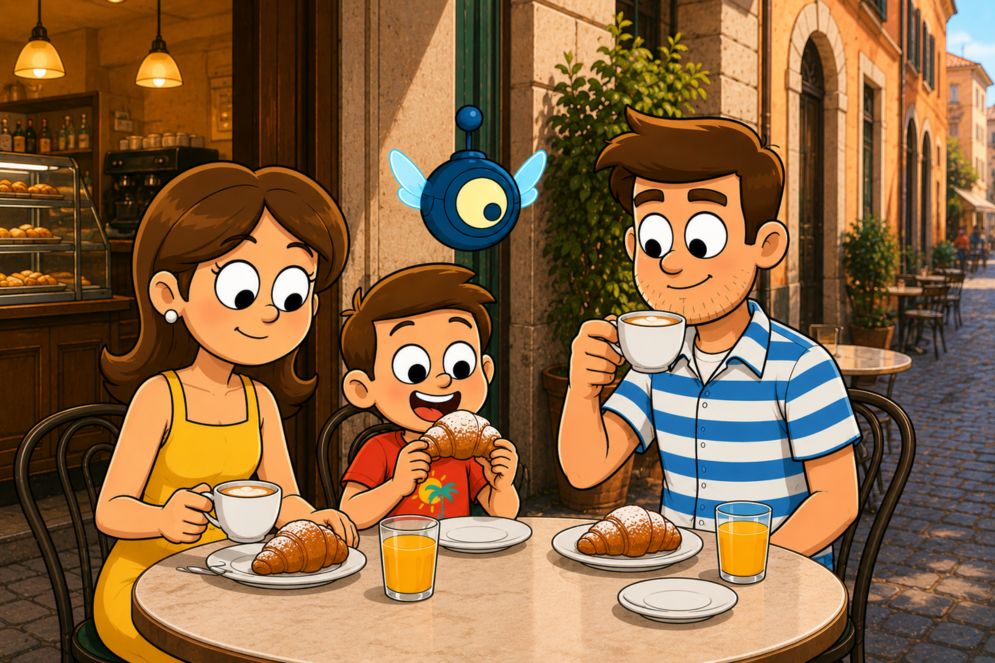
The fix is simple and costs almost nothing. Rome’s bars – the small neighbourhood cafés, not the tourist-facing places – serve breakfast that takes ten minutes and costs €3 to €5 per person. A cornetto and a juice. A small pastry and a coffee. It’s fast, it’s good, and it sets up the morning completely differently.
Pack snacks in your bag for the mid-visit dip. Not a full meal – just something to bridge the gap. Nuts. Crackers. A piece of fruit. Something that doesn’t melt in the heat and doesn’t require refrigeration.
And plan your post-visit lunch in advance. Not the first restaurant you see outside the Colosseum – those are almost always tourist traps with mediocre food at inflated prices.
Our current favourite for families after the Colosseum: 📍 Le Terme del Colosseo
A proper sit-down restaurant – not a tourist trap, not a stand-up pizza counter – where you can actually breathe after the intensity of the morning. The kind of place where kids are welcome, the pasta is hot, and nobody rushes you out. Perfect for a post-Colosseum lunch when everyone needs to sit down, eat something real, and reset before the afternoon.
📧 GET OUR FREE SMART FAMILY MAP
The best family-friendly restaurants, secret parks, gelaterias and rest spots near Rome’s top sights – tested and verified by a local Rome mum with 10 years of experience.
Follow us on Instagram @looksart.eu and send us MAP in a direct message. We’ll send it straight back to you. 🗺️
5. Give your child one job.
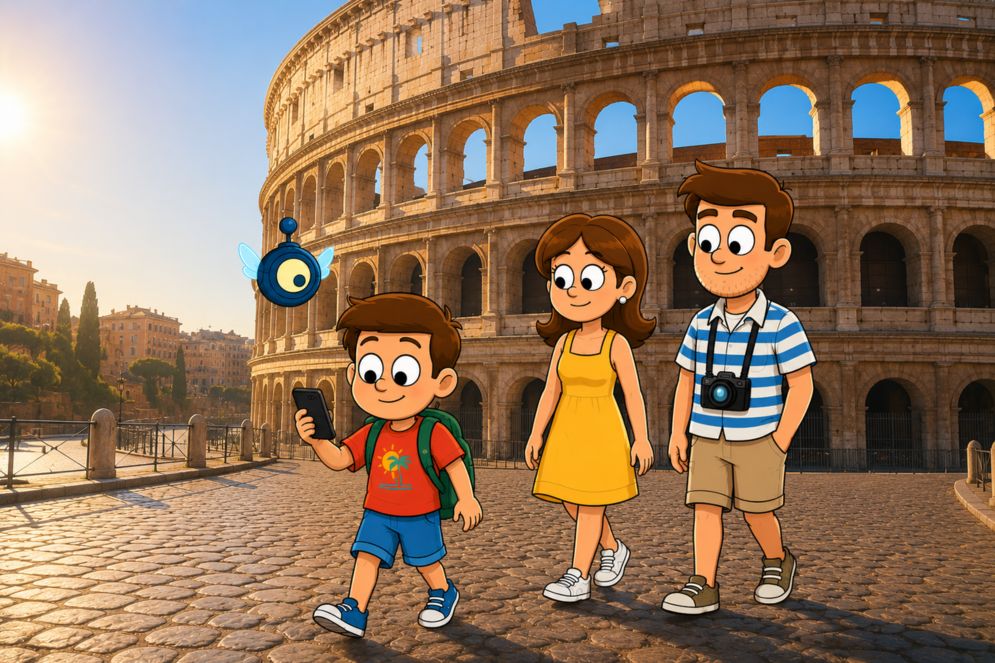
This is the simplest trick on this list. It’s also the one that most consistently transforms a difficult child into an engaged one.
Before you enter anywhere, give your child a role. A specific one.
Navigator: they hold the map and tell you which way to go. Photographer: they’re in charge of documenting the visit. Fact detective: their job is to find three things nobody else notices. Timekeeper: they tell you when it’s time to move to the next stop.
It doesn’t matter which role you choose. What matters is that your child has a function – something that makes them a participant rather than a passenger. A child with a job is invested in the outcome. A child who is invested doesn’t ask to go home.
This principle is at the heart of everything we built at LooksArt. In our self-guided family adventures, every child is automatically given a role – Una and Archebot assign missions, ask questions, and treat your child as the lead investigator. But even without an app, you can do this yourself with nothing more than a map and a question.
Hand them something. Ask them to find something. Let them lead.
The moment you stop pulling your child through Rome and start following them – the entire dynamic of the day changes.
6. Do the hardest thing first.

I’ve worked with hundreds of families who visited the Colosseum after midday. I’ve worked with hundreds who visited first thing in the morning. The difference in their experience is not subtle.
Morning visits are quieter. The temperature is lower. The light is better. The security queues are shorter. And most importantly – your child’s energy and tolerance are at their peak. The Colosseum at 10am is a completely different experience from the Colosseum at 2pm, and it has nothing to do with the monument itself.
Children’s energy follows a predictable pattern: highest in the morning, declining steadily through the afternoon, with a significant crash after lunch. Build your day around this reality rather than against it.
Do the big, important, unmissable thing first – while everyone is fresh and the day feels full of possibility. Save the lower-stakes activities for the afternoon: a gelato walk, a quiet piazza, a park where your child can run. These things work beautifully when energy is lower. The Colosseum does not.
Bonus: after every monument — find a park.
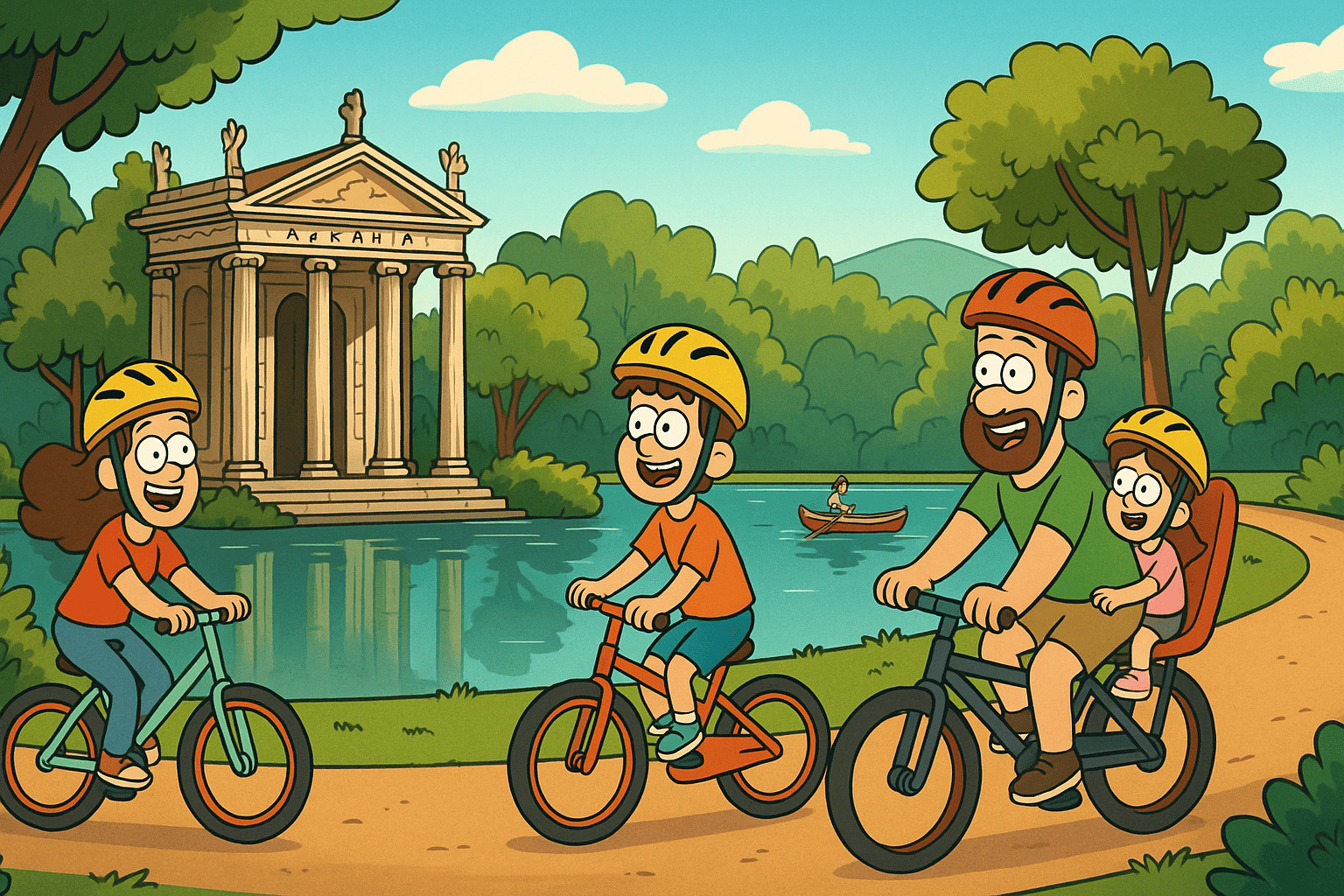
This is the trick that nobody puts in travel guides. It should be in every single one.
Museums and monuments require children to suppress every natural instinct they have. Don’t run. Don’t touch. Be quiet. Stay close. For an hour or two hours, your child is operating against their own nature. The energy that didn’t get released inside the monument has to go somewhere – and if you don’t give it somewhere to go, it comes out as whining, resistance, or a complete collapse on the cobblestones outside.
The solution is not complicated: build a park stop into every museum day. Not at the end of the day when everyone is already exhausted – right after the monument, before lunch.
Twenty minutes of completely unstructured running around resets a child’s mood more effectively than any snack, any screen, or any amount of patient parenting. It works every time.
One hidden gem worth going slightly out of your way for:
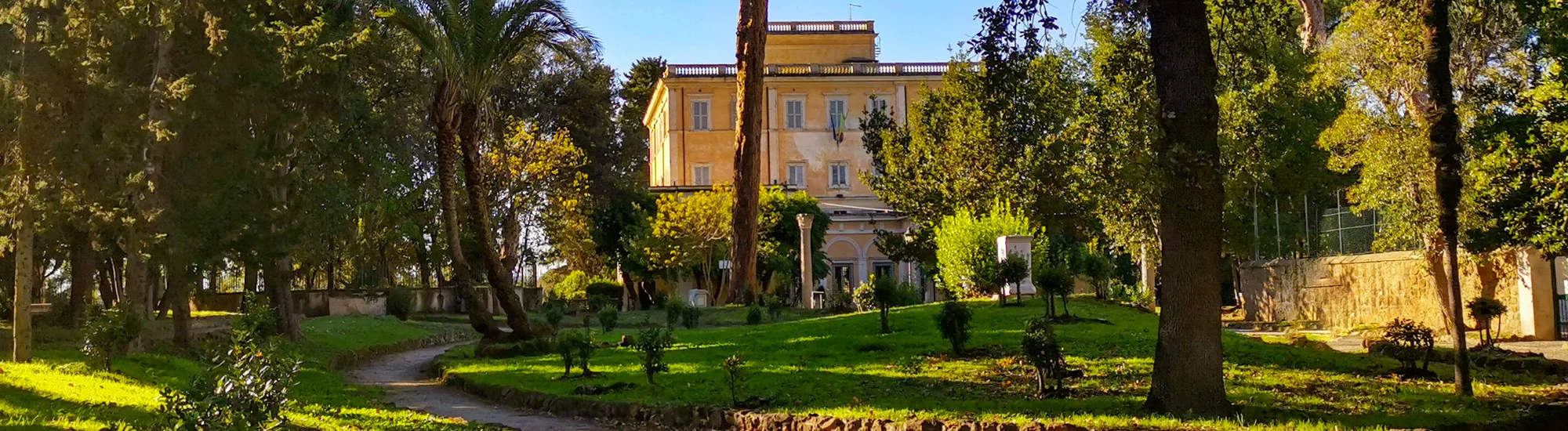
Inside Villa Celimontana – a peaceful park a ten-minute walk from the Colosseum – there’s a small gothic-style temple that almost nobody knows about. It’s called the Tempio Gotico, and it is one of the most unexpectedly beautiful spots in this part of Rome.
No queues. No crowds. Just a genuinely striking structure surrounded by greenery, perfect for family photos that look nothing like every other Rome holiday picture.
Children love it because it looks like something from a storybook. Parents love it because it’s quiet and shaded and nobody is trying to sell them anything.
It’s also a short walk from the end of our Colosseum Secrets adventure – which makes it the perfect place to decompress after the route, let the kids run around, and take the kind of photos that will actually end up framed.
7. Build in one completely unplanned hour.
This one will feel counterintuitive if you’re the kind of person who plans carefully. You’ve done the research. You’ve booked the tickets. You have a schedule. Why would you leave an hour empty?
Because the best moments in Rome are always the unplanned ones. Every family I’ve ever worked with says the same thing when I ask what they remember most about their trip. It’s never the monument they queued for. It’s what happened in between.
The cat your child spotted sleeping on a 2,000-year-old stone. The street musician who made everyone stop and listen. The gelateria you stumbled into by accident that turned out to be the best one you’d ever tried. The fountain your child decided was magic and refused to leave for twenty minutes.
These are the moments that become stories. These are the moments families talk about for years. Leave one hour in your day with nothing scheduled. No monument, no plan, no destination. Let your child lead. See where you end up. Say yes to things you didn’t expect.
Rome rewards wandering more than any other city I know. And children, it turns out, are exceptional at it – because they haven’t learned yet to rush past things.
One more thing: the right tool for the right city.
All seven of these tricks come down to the same principle: your child needs to feel like a participant, not a passenger. When children are invested in the day -when they have a role, a mission, a reason to keep going – Rome stops being something that happens to them and starts being something they’re part of.
After 10 years of watching what works and what doesn’t, this is the principle we built LooksArt on.
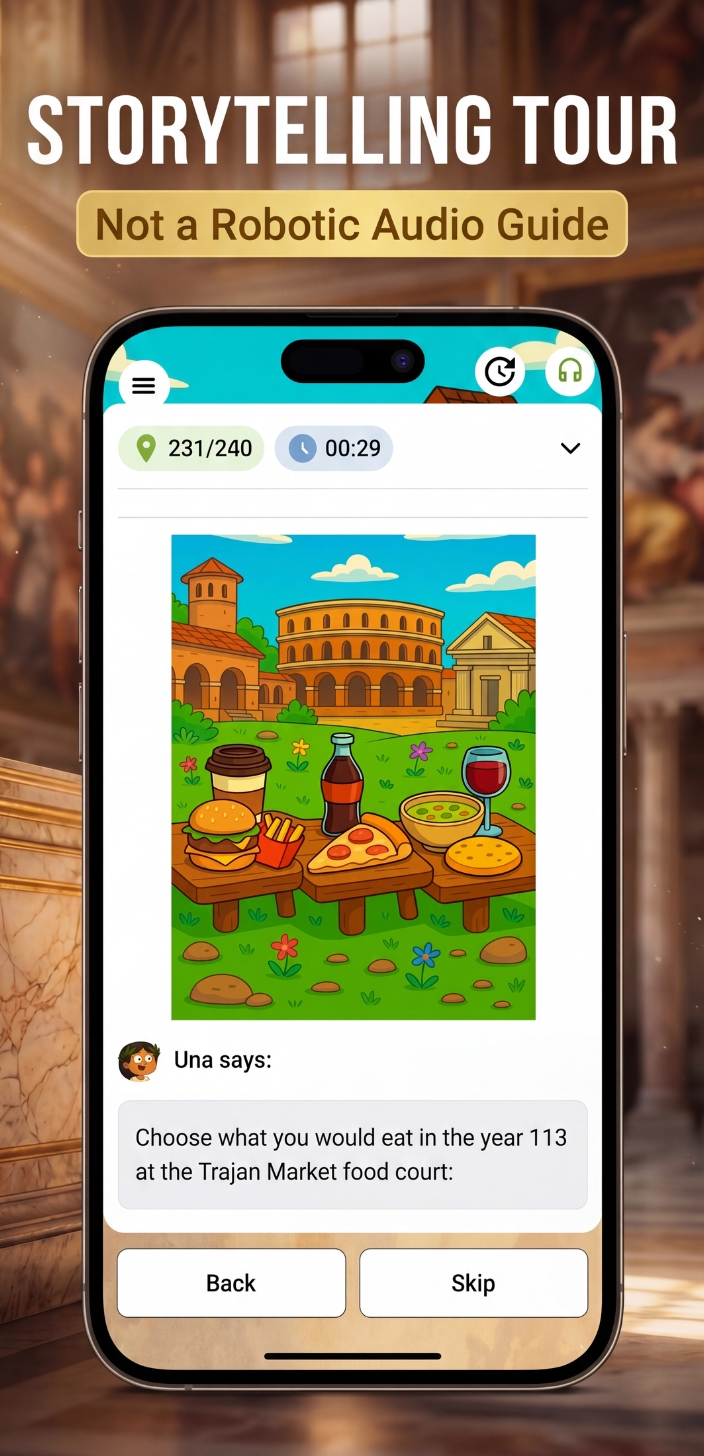
LooksArt is a self-guided family adventure that runs on your phone – fully offline, no guide needed, one price for the whole family. Our characters Una and Archebot guide your child through Rome’s greatest sights through missions, riddles, and stories that bring the city to life. Your child leads. You follow. Everyone remembers.
We currently have two adventures available:
🏛 Colosseum Secrets – a deep dive into Ancient Rome around the Colosseum. Perfect for children aged 6–14 who want to understand what really happened here.
🍦 Discover Rome – a 3km walk through Rome’s historic centre from Piazza Venezia to the Pantheon. Landmarks, hidden spots, riddles, stories, and a real gelato reward at the finish line.
✝️ The Secrets of the Vatican -uncover the hidden stories and secrets of the Vatican Museums with your family.
- Both work fully offline.
- Both are available in six languages. 🇷🇺 🇬🇧 🇫🇷 🇮🇹 🇪🇸 🇩🇪
- Both include a real gelato reward at the finish. 🍦
- Both are €29 for the whole family – up to 5 devices.
📧 BEFORE YOU GO - GET THE SMART FAMILY MAP
Everything in this article is more useful with the right map in your pocket.
Our Smart Family Map covers the area around the Colosseum and Rome’s historic centre – verified family restaurants, secret parks, the best gelaterias, quiet rest spots, and hidden local gems that most tourists never find.
It’s free. Follow us on Instagram @looksart.eu and send us MAP in a direct message. We’ll send it straight to you.
Rome with kids is not about surviving the trip.
It’s about giving your child a city they’ll want to come back to.
These seven tricks – plus the bonus – won’t guarantee a perfect day. Rome is too alive and too unpredictable for that. But they’ll give you the best possible conditions for one. The rest is up to Rome. And in my experience – Rome almost always delivers.