Skip to content
LooksArt by WOW Italy · the smart alternative to an expensive private guide in Rome
Key information
What is included
Historic Rome, Secrets of the Colosseum, Vatican Museums family tour
Who it is for
families with children aged 6–14
Duration
about 2–2.5 hours per tour
When to play
any day, in any order, across your trip
Codes
Historic Rome code right after payment, Colosseum and Vatican codes by email within 24 hours
Devices
1 device per purchase
Format
self-guided routes in the app, works offline
A closer look
How the adventure unfolds
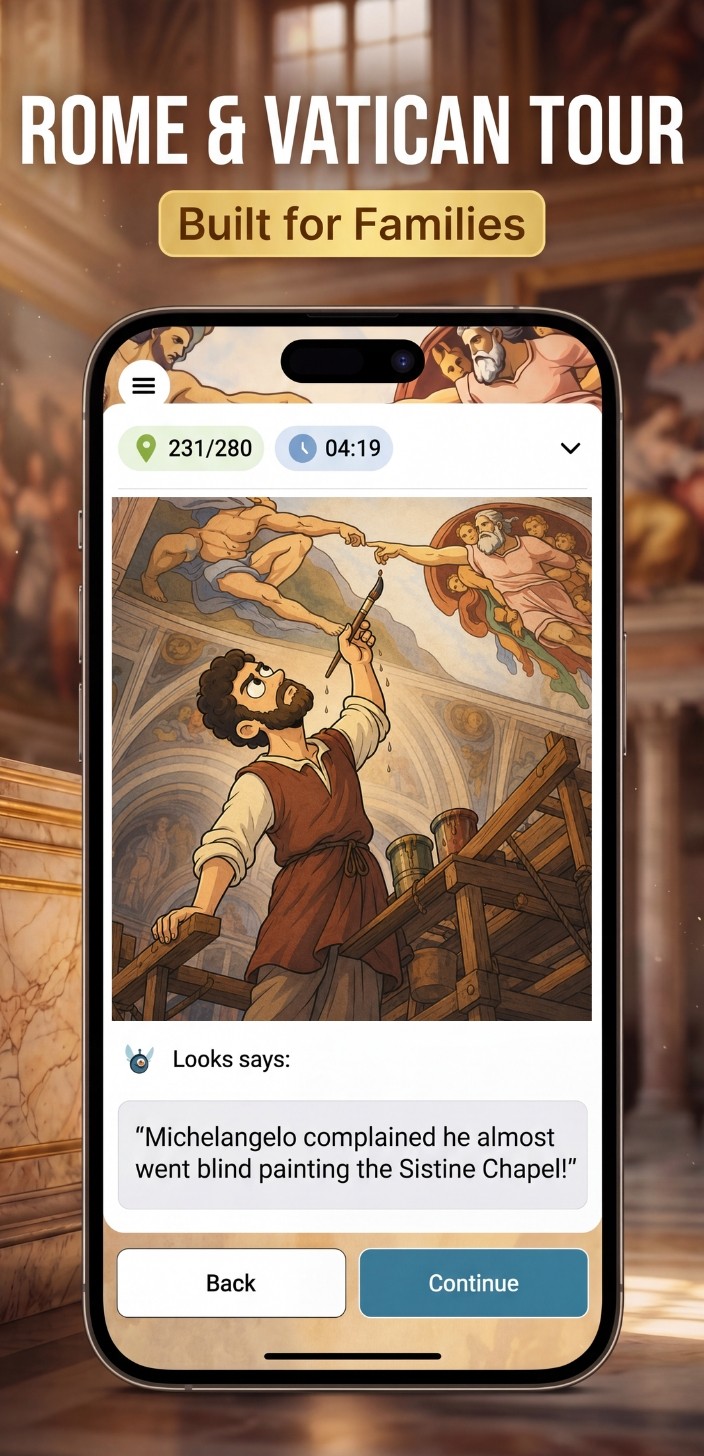
A tour of Rome and the Vatican
Made for families
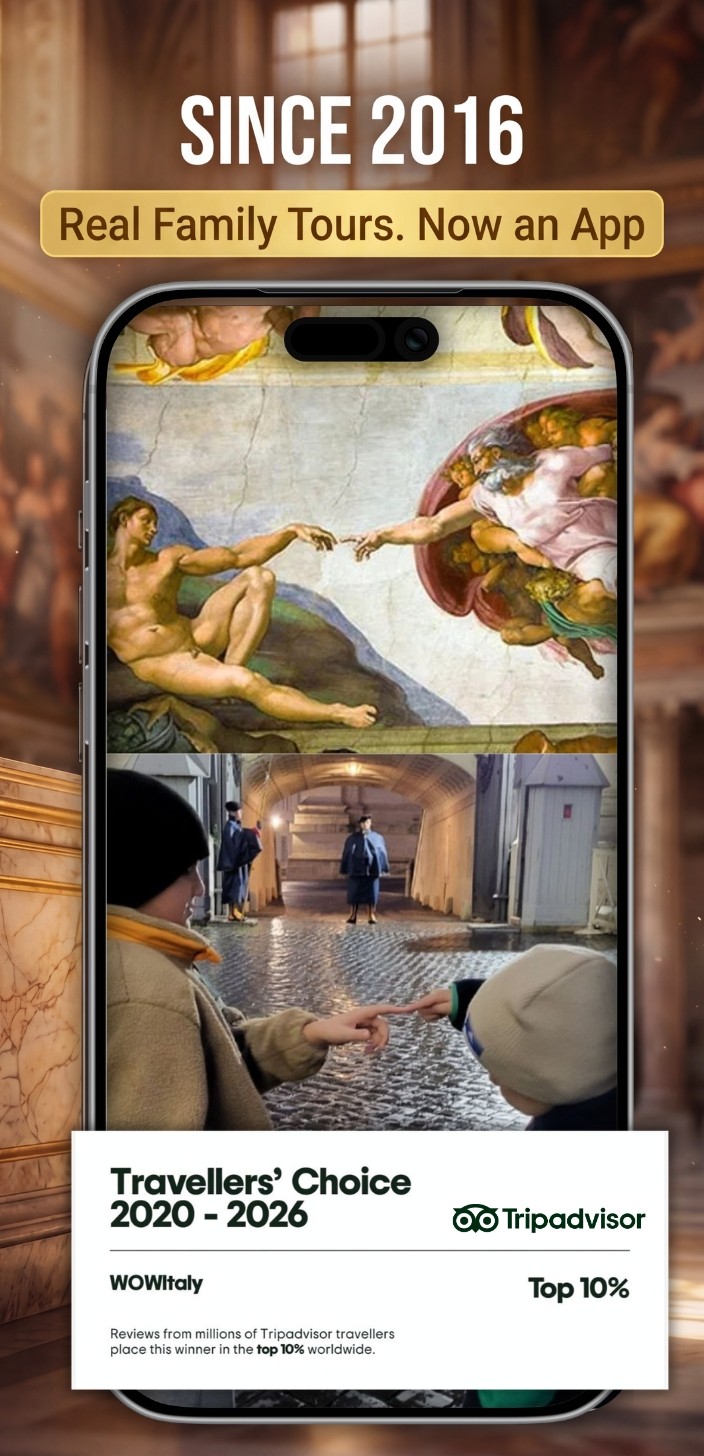
Since 2016
Ten years of family tours — now in the app
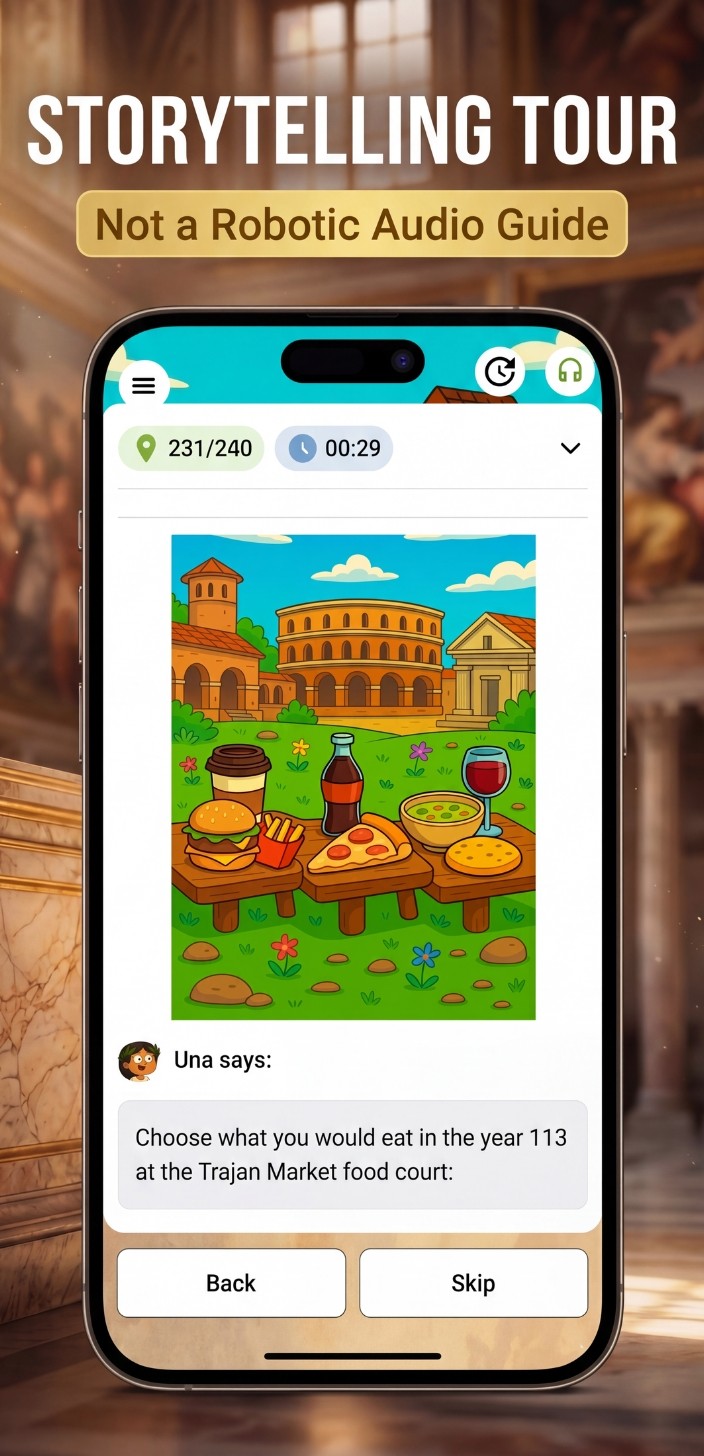
A wow story instead of a lecture
Not a dull audio guide
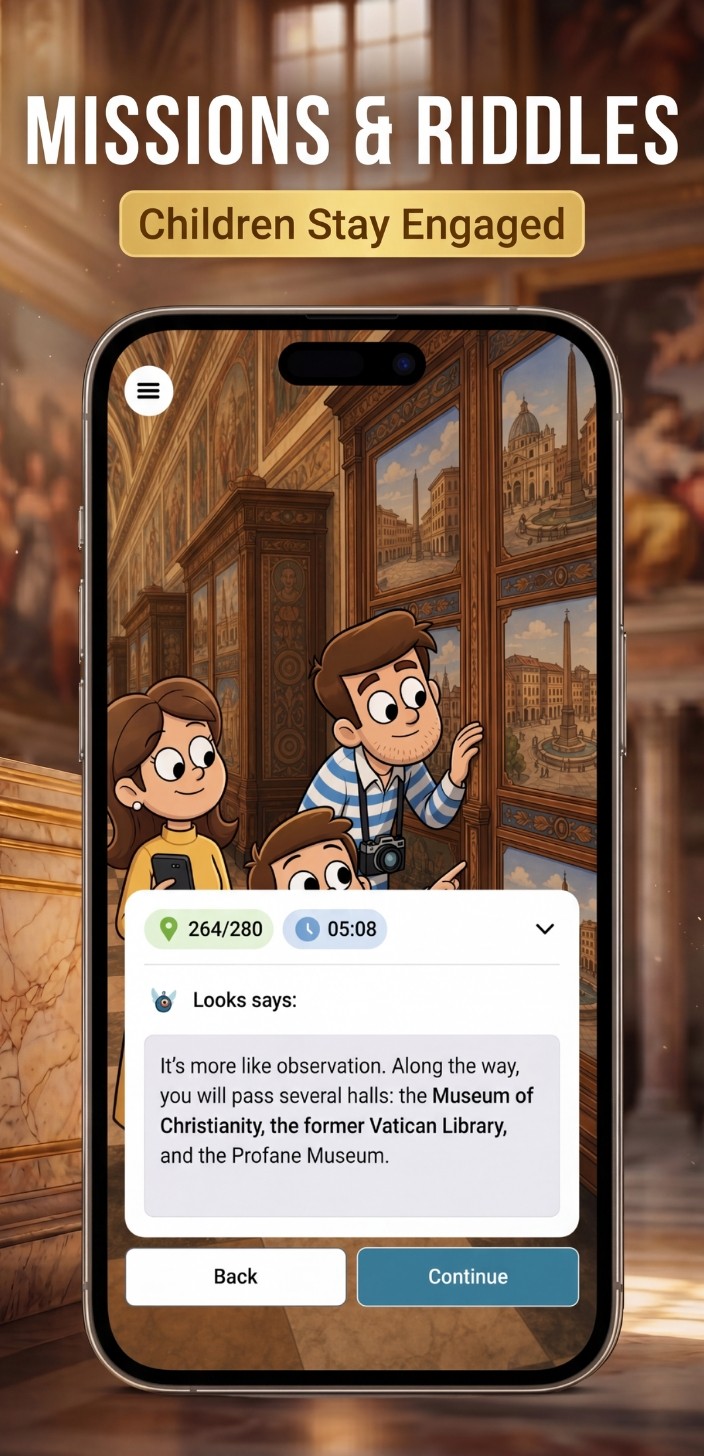
Missions and riddles
Kids stay engaged
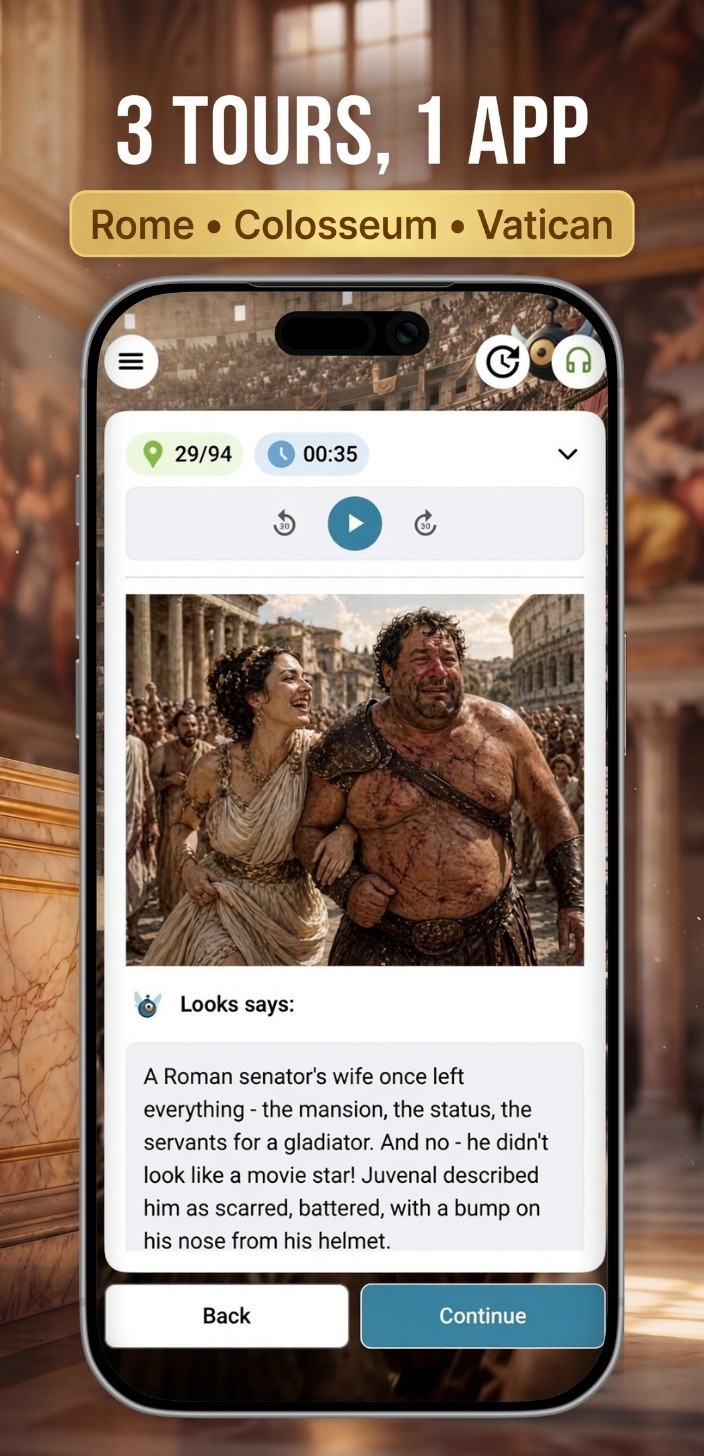
3 tours, 1 app
Rome · Colosseum · Vatican
A private guide
In your phone
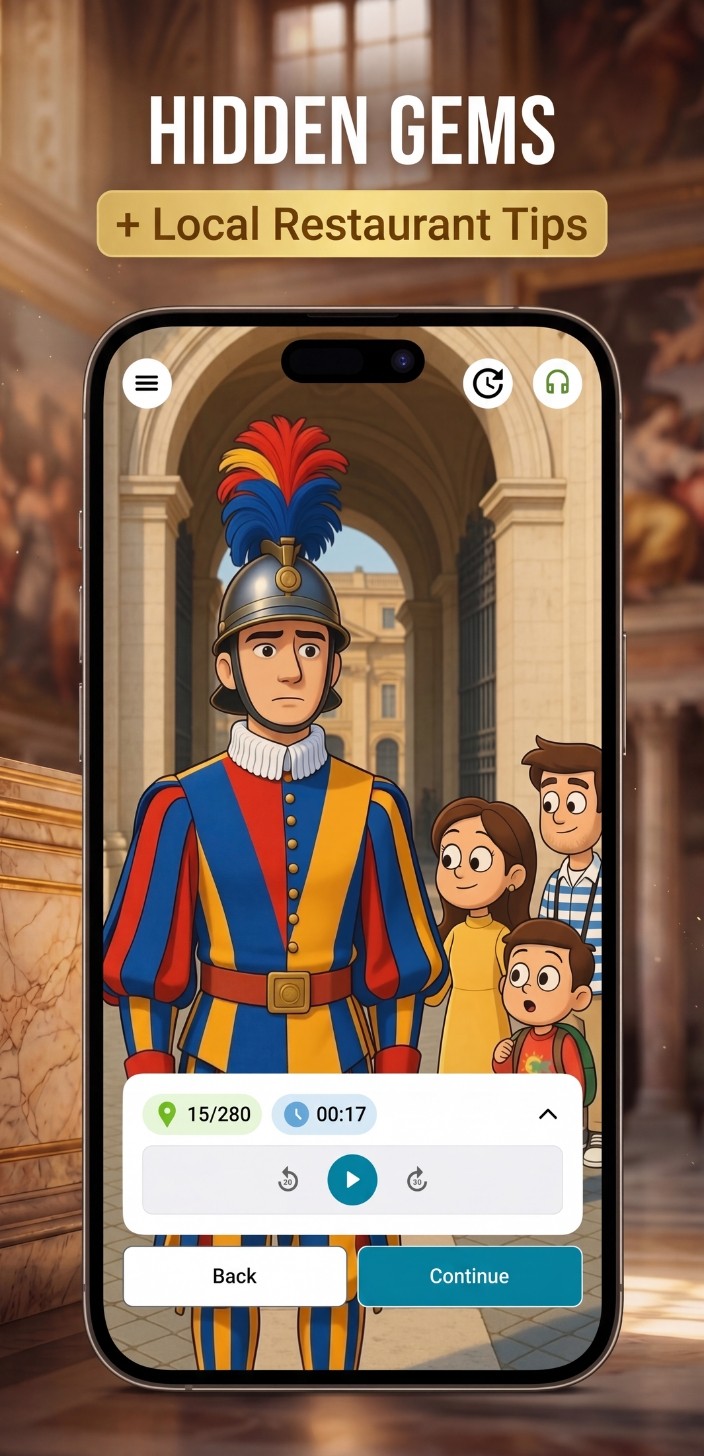
What no guidebook will tell you
Secret spots and family-friendly restaurants
Useful tips
Many families do Historic Rome and the Colosseum on one day and the Vatican on another.
Entrance tickets to the Colosseum and the Vatican Museums are not included, book them in advance on the official websites.
The Vatican Museums are closed on most Sundays, check the official calendar.
A smartphone with the tours downloaded in advance, headphones, a power bank and comfortable shoes.
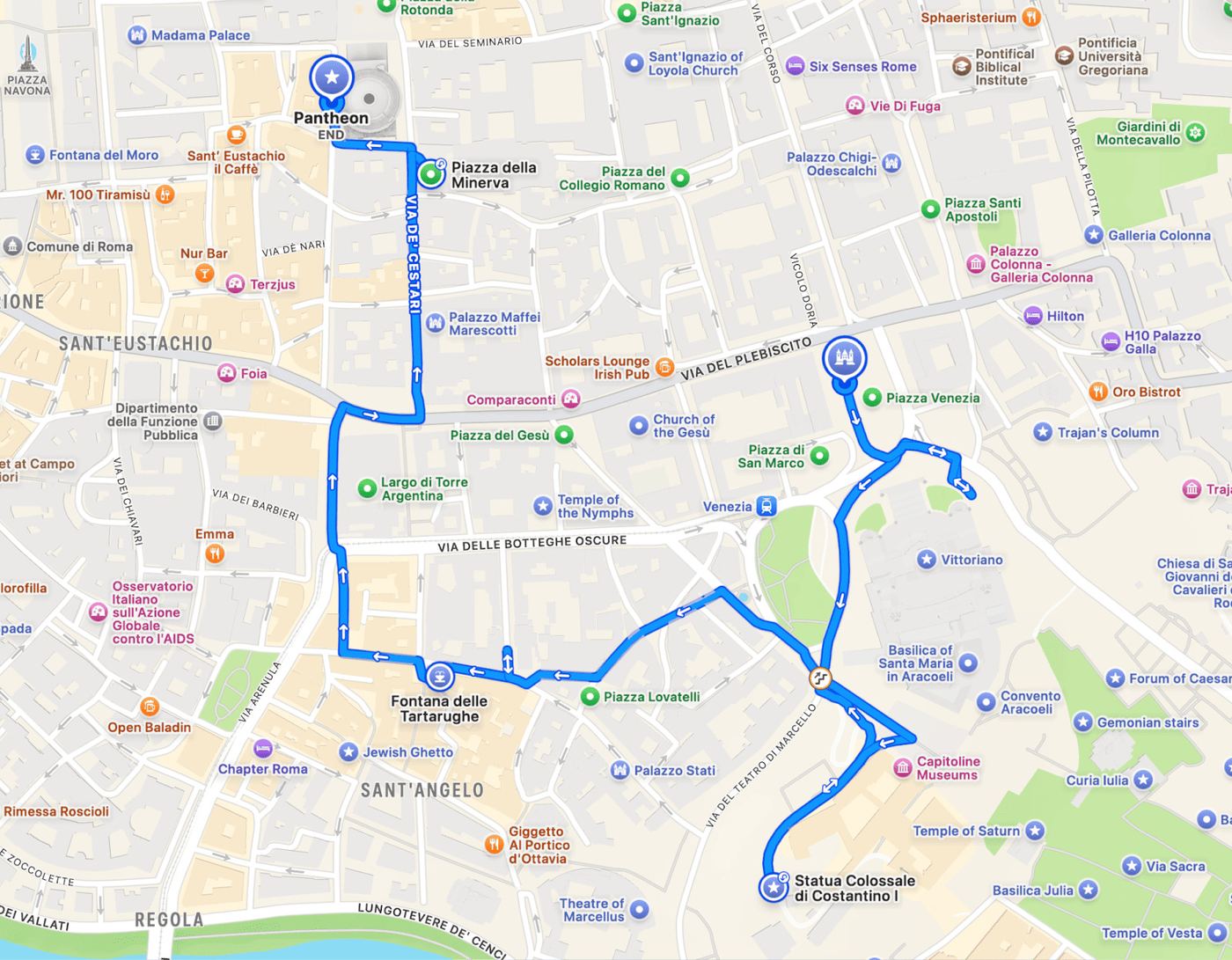
Route · about 5 km in total 10 stops around the historic centre Start at Piazza Venezia, finish at the Pantheon. The app leads you from point to point.
1
Piazza Venezia
Read more
3
Piazza del Campidoglio
Read more
4
The statue of Constantine
Read more
5
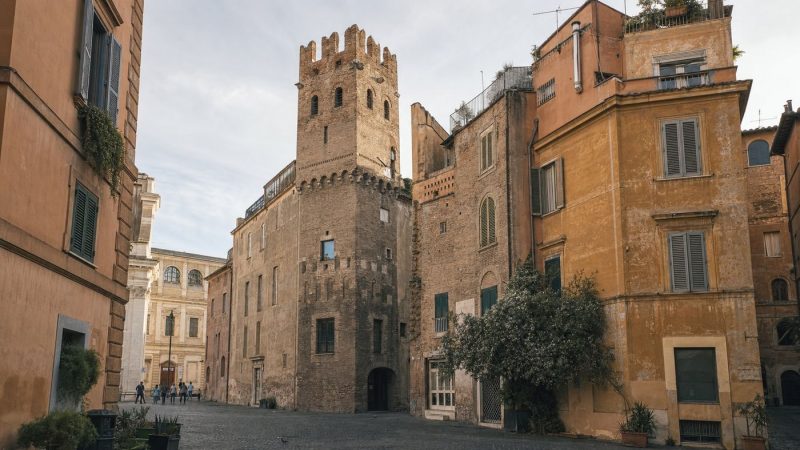
Piazza Margana
Read more
6
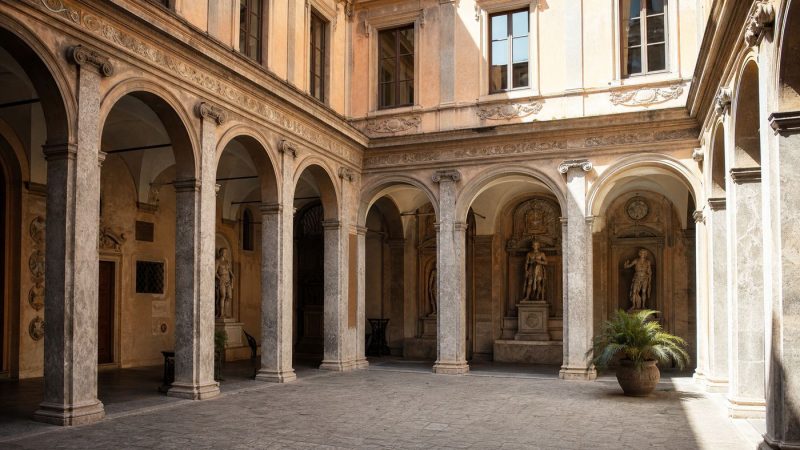
Palazzo Mattei
Read more
7
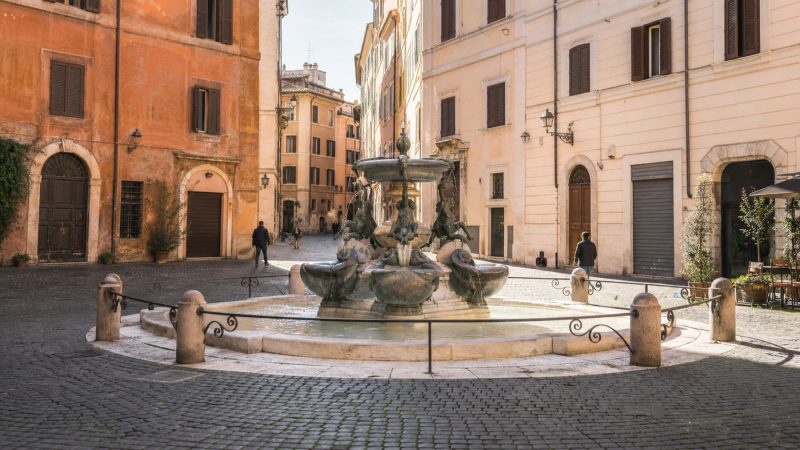
Fontana delle Tartarughe
Read more
8
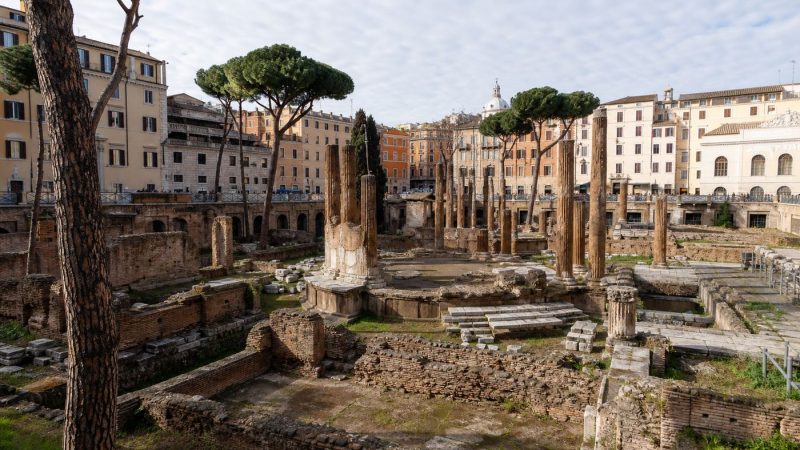
Largo di Torre Argentina
Read more
9
Piazza della Minerva
Read more
10
The Pantheon
Read more
A map of the tour route: from Piazza Venezia to the Pantheon
1
Start
Piazza Venezia
2
Vittoriano
3
Piazza del Campidoglio
4
The statue of Constantine
5
Piazza Margana
6
Palazzo Mattei
7
Fontana delle Tartarughe
8
Largo di Torre Argentina
9
Piazza della Minerva
10
Finish
The Pantheon
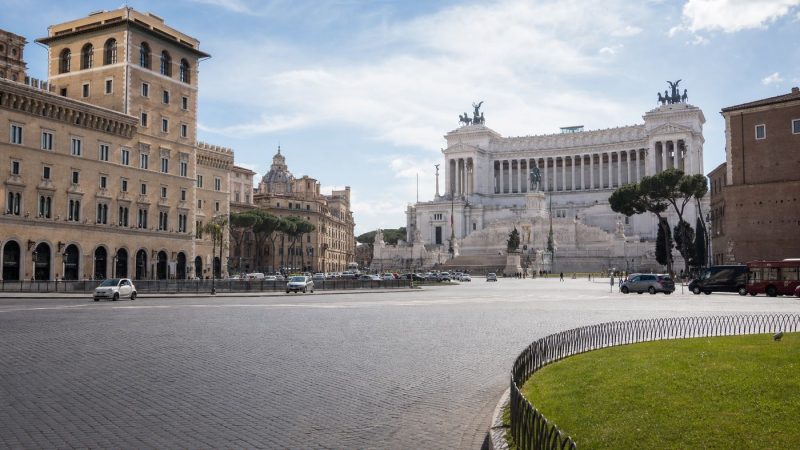
Piazza Venezia
Stop 01 / 10
Piazza Venezia became one of Rome’s main crossroads after the large-scale rebuilding of the late nineteenth and early twentieth centuries. The square takes its name from Palazzo Venezia, a fifteenth-century palace that long served as the residence of the ambassadors of the Venetian Republic. Today you can see at once the palace’s austere façade, the white marble Vittoriano and the streets leading to the Colosseum, the Capitoline Hill and the historic centre.
← Previous01 / 10
Next →
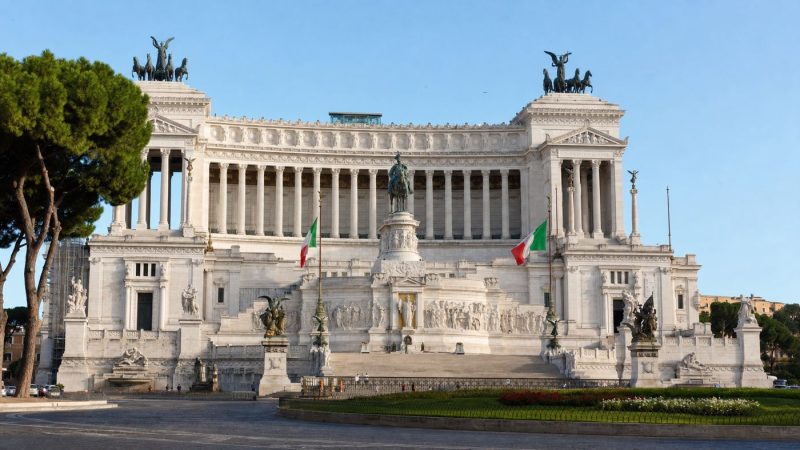
Vittoriano
Stop 02 / 10
The Vittoriano monument was built in honour of Victor Emmanuel II, the first king of a united Italy. Construction began in 1885 and continued for several decades. White marble, broad staircases and an enormous equestrian statue turned the building into one of Rome’s most conspicuous landmarks. Inside is the Altar of the Fatherland with the tomb of the Unknown Soldier, and the upper terraces open onto a panorama of the historic centre.
← Previous02 / 10
Next →
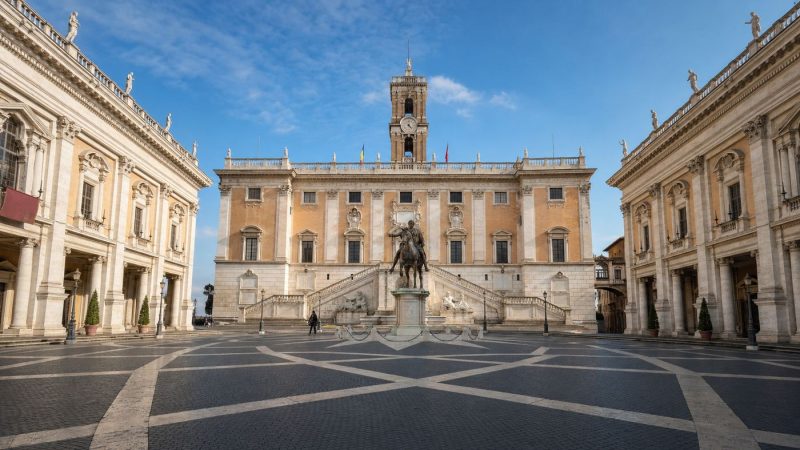
Piazza del Campidoglio
Stop 03 / 10
The present appearance of the Capitoline square is based on Michelangelo’s sixteenth-century design. He turned the space towards the new Rome and created a harmonious ensemble of three palaces. At the centre stands a copy of the ancient equestrian statue of Marcus Aurelius; the original is kept in the Capitoline Museums. The famous geometric paving pattern was completed much later, yet it is precisely this that emphasises the symmetry the architect intended.
← Previous03 / 10
Next →
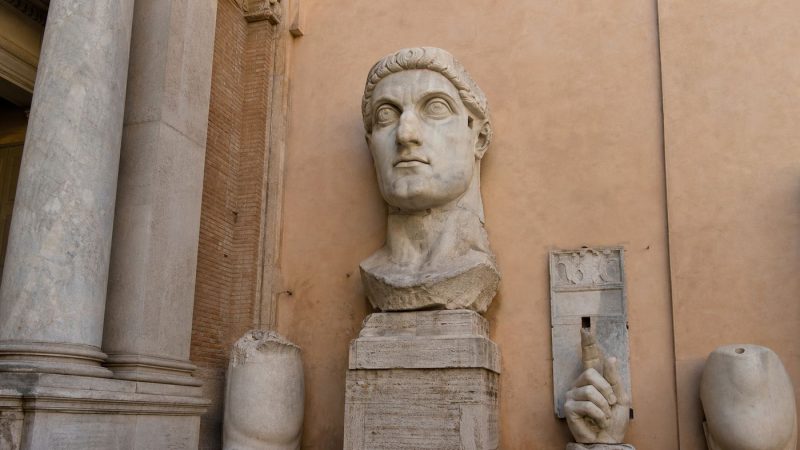
The statue of Constantine
Stop 04 / 10
The Colossus of Constantine was created at the beginning of the fourth century for the Basilica of Maxentius in the Roman Forum. The emperor’s figure sat on a throne and stood roughly twelve metres tall. What survives today are monumental marble fragments — the head, the hands and the feet, displayed in the courtyard of the Capitoline Museums. That extraordinary scale helped the ruler appear almost superhuman and underlined the new imperial power.
← Previous04 / 10
Next →
Piazza Margana
Stop 05 / 10
The small Piazza Margana has preserved a medieval atmosphere that is rare in the centre of Rome. Its name is linked to the influential Margani family, who owned houses and a fortified tower here. The narrow façades show traces of centuries of rebuilding: ancient stone sits alongside brick, arches and Renaissance windows. The square is only a few minutes from the busy Piazza Venezia, yet it remains a quiet reminder of the quarters of the medieval city.
← Previous05 / 10
Next →
Palazzo Mattei
Stop 06 / 10
Palazzo Mattei di Giove was built at the beginning of the seventeenth century for the noble Mattei family to a design by the architect Carlo Maderno. The palace courtyards became an open collection in their own right: the walls, arcades and staircases are decorated with ancient reliefs, busts and statues. This was how the owners displayed their learning, their wealth and their connection to the heritage of Ancient Rome. The calm architecture of the courtyard is all the more striking for the contrast with its rich sculptural decoration.
← Previous06 / 10
Next →
Fontana delle Tartarughe
Stop 07 / 10
The Turtle Fountain appeared on Piazza Mattei in the 1580s to a design by Giacomo della Porta, with bronze figures by Taddeo Landini. Youths support the basin and reach towards its rim, where small turtles were added later. Those details, probably introduced during a seventeenth-century restoration, gave the fountain its present name. Its intimate scale and the delicacy of the bronze work make it one of the most graceful fountains in Rome.
← Previous07 / 10
Next →
Largo di Torre Argentina
Stop 08 / 10
The archaeological area of Largo di Torre Argentina preserves the remains of four Republican temples built between the fourth and first centuries BC. They were discovered during city works in the 1920s. Nearby stood the complex of the Theatre of Pompey, where Julius Caesar was murdered in 44 BC. Today the ruins lie below the level of the modern streets and show vividly how the new Rome grew over the ancient city.
← Previous08 / 10
Next →
Piazza della Minerva
Stop 09 / 10
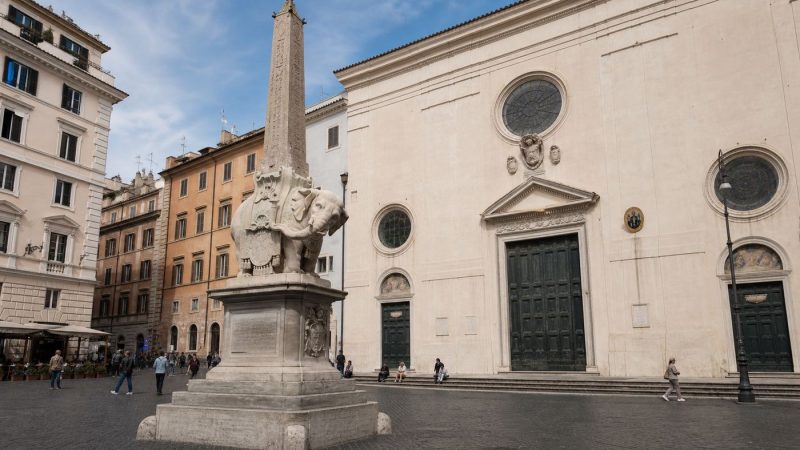
The centrepiece of Piazza della Minerva is a marble elephant carrying an ancient Egyptian obelisk. The composition was conceived by Gian Lorenzo Bernini and carved by the sculptor Ercole Ferrata; the monument was installed in 1667. The obelisk was found nearby, on the site of a former temple of Isis. The unusual pairing of heavy stone with an almost playful animal expresses the idea that true wisdom requires a strong and steady mind.
← Previous09 / 10
Next →
The Pantheon
Stop 10 / 10
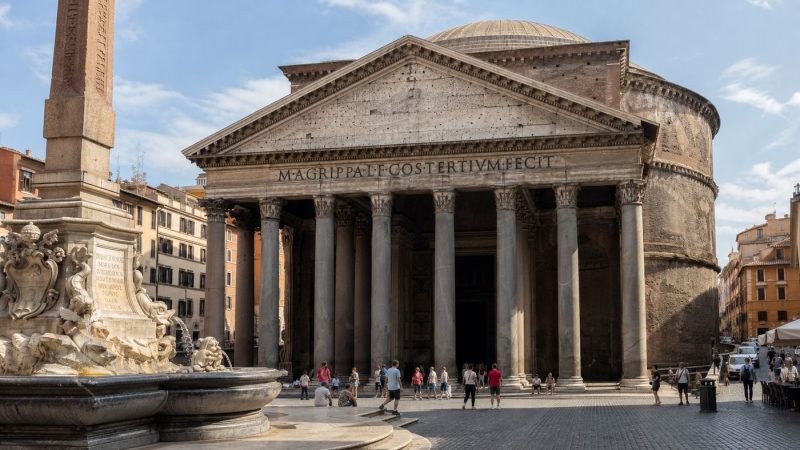
The Pantheon was built under the emperor Hadrian around the year 125 on the site of an earlier temple by Marcus Agrippa. For almost two thousand years its concrete dome has remained the largest unreinforced dome of its kind. Its only source of light from above is the nine-metre oculus at the centre. In the seventh century the building was turned into a Christian church, which is why it has survived far better than most of Rome’s ancient structures.
← Previous10 / 10
Next →
How it works
From purchase to reward — 5 steps
01
Buy the Rome Pass on the website
You get the Historic Rome code right away. The Colosseum and Vatican codes arrive by email within 24 hours.
02
Download the LooksArt app
Activate each tour with its own code.
03
Start whenever suits you
The app works offline — you do not need the internet on the way.
04
Follow the story
Every point on the route brings a new story, mission and task.
05
Make it to the finish
At the end there is a hero’s reward and an ice cream as a gift for finishing.
“Rome Pass” for €19.99
for the whole family · 1 device. Lifetime access, works offline.
Buy the tour
The LooksArt app
Download LooksArt and start exploring
A free app for iOS and Android. The tour you buy unlocks with the PIN code from your email and works offline.
A tour through Rome with children — how it works
The route runs from Piazza Venezia through the Capitoline Hill and Largo di Torre Argentina to the Pantheon: three kilometres across the historic centre, around 2.5 hours including stops. Every point brings a riddle, a short audio story and a task the child completes themselves.
The tour runs without a guide and without a group: you go at your own pace, pause for lunch or an ice cream and continue whenever it suits you. The app works offline, so you do not need the internet on the way.
Read next
Rome Pass
about 6.5 hours in total · 6+ · for the whole family · 1 device
€19.99
Buy the tour
We use cookies so that the site works correctly and we can see which pages are useful. Details are in the Cookie Policy .
Accept all
Essential only
×
✓ Secure checkout✓ Money-back guarantee★ Instant access
Pay

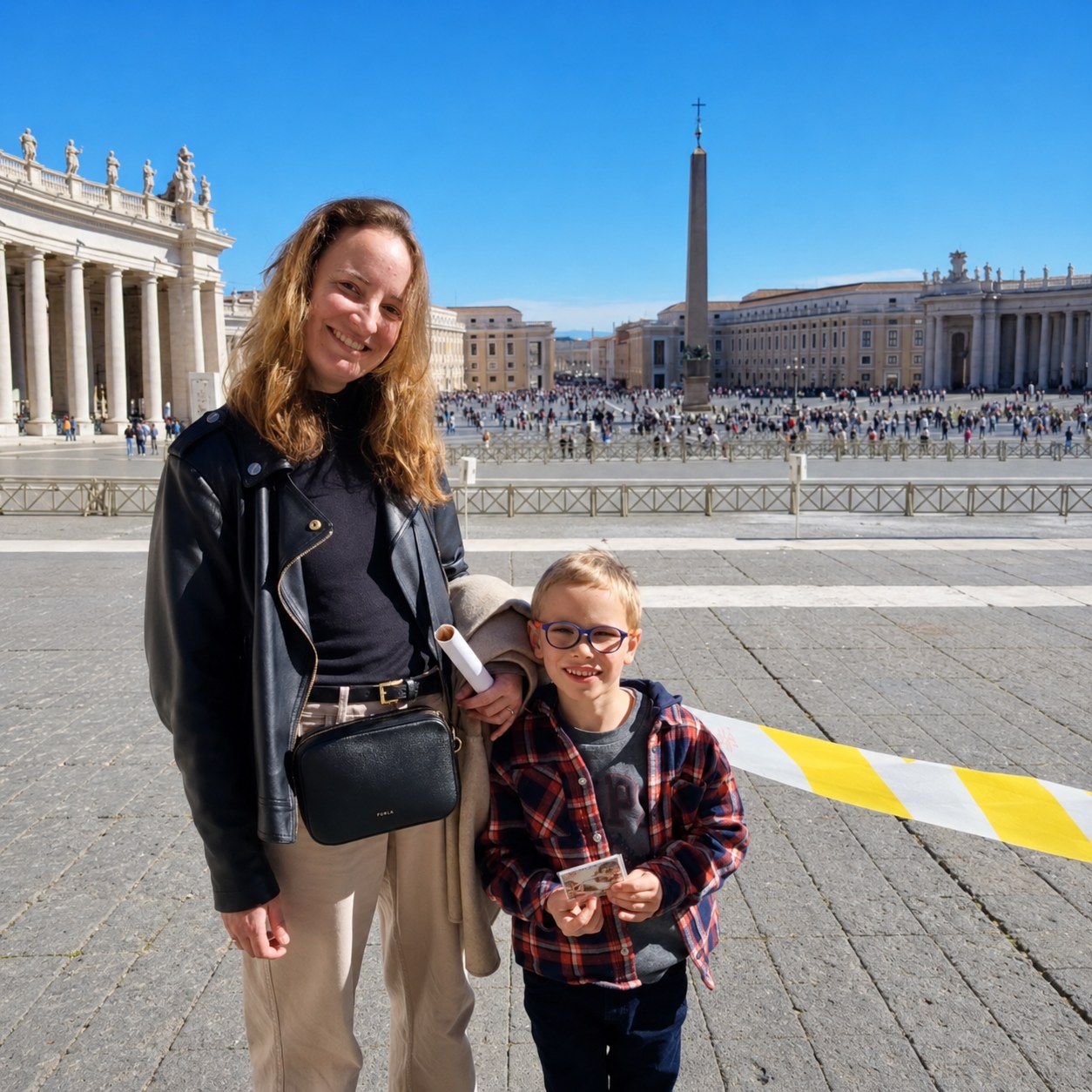
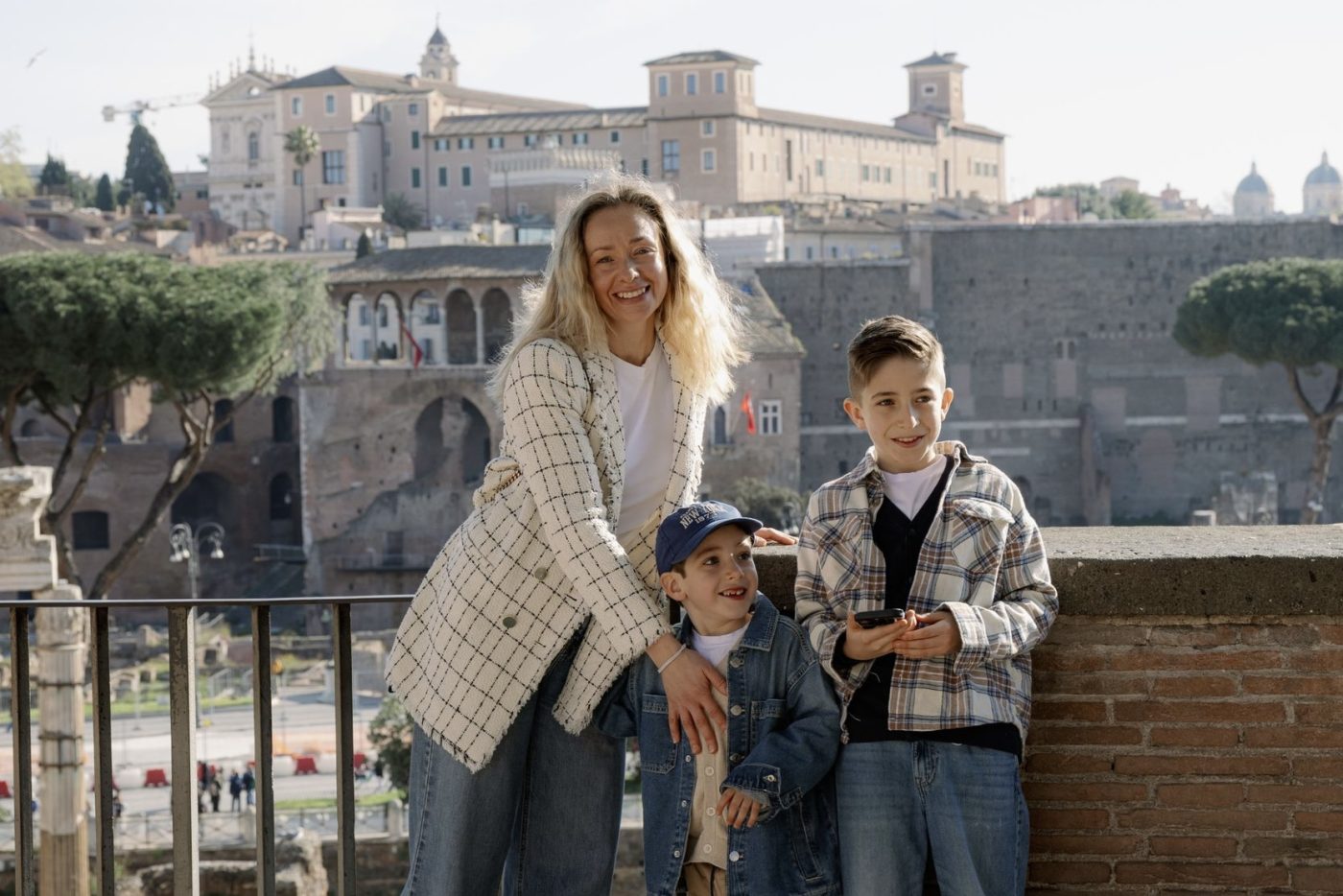
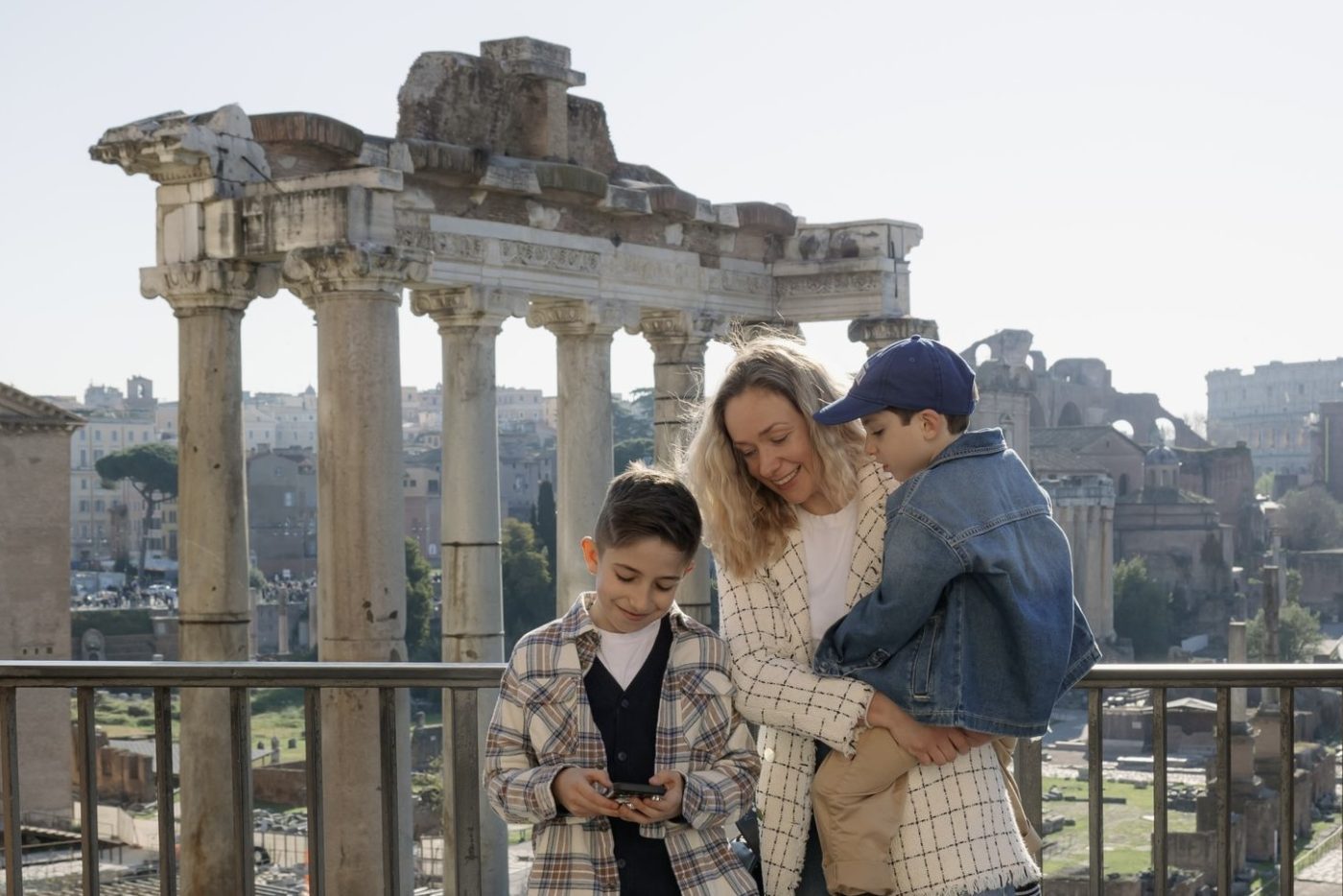
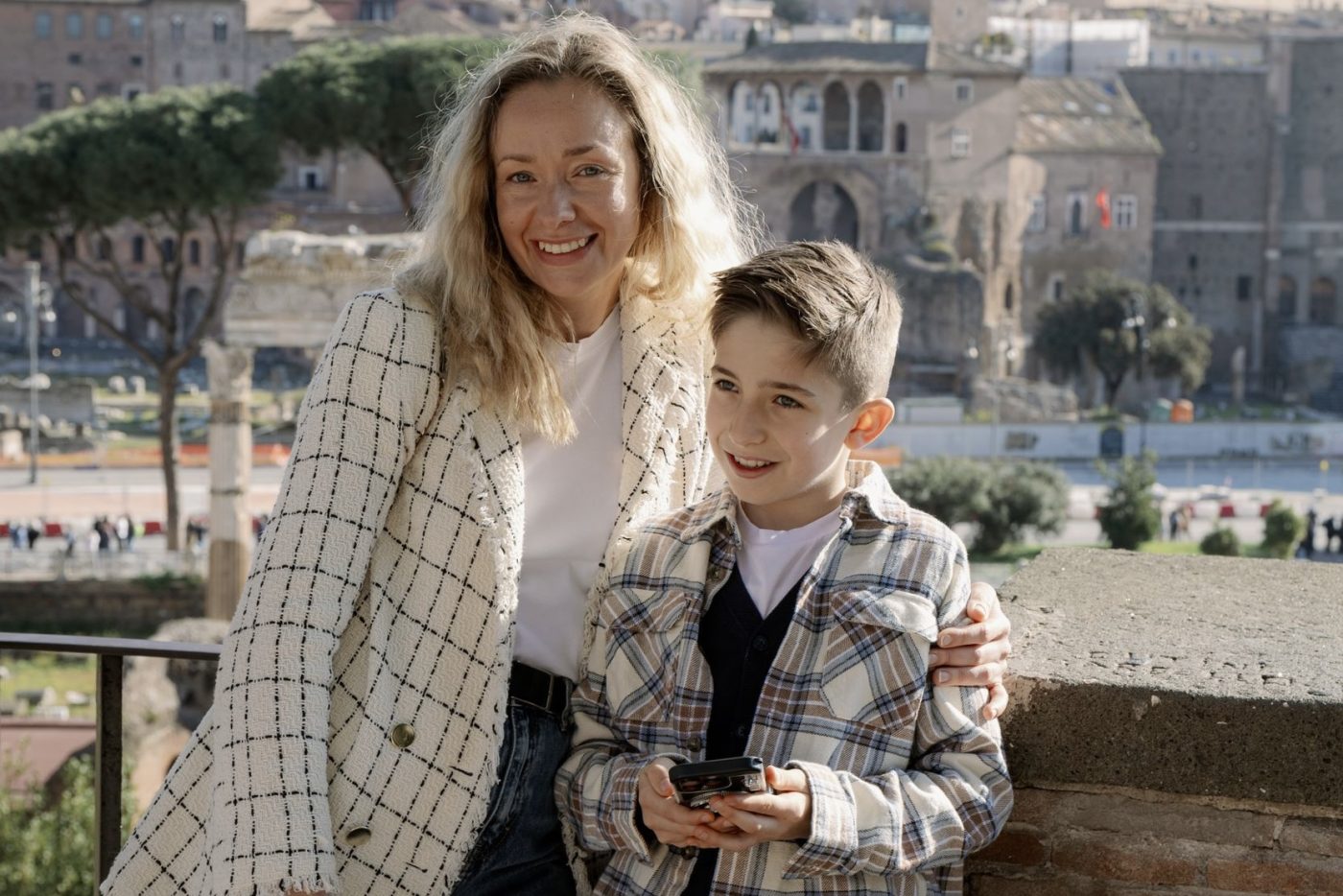

 Top-rated tour
Historic Rome City Center Walk
A scenic family stroll through Rome’s heart. Journey from Piazza Venezia to the Pantheon with captivating local legends, history, and fun challenges for all ages.
€9
View Tour →
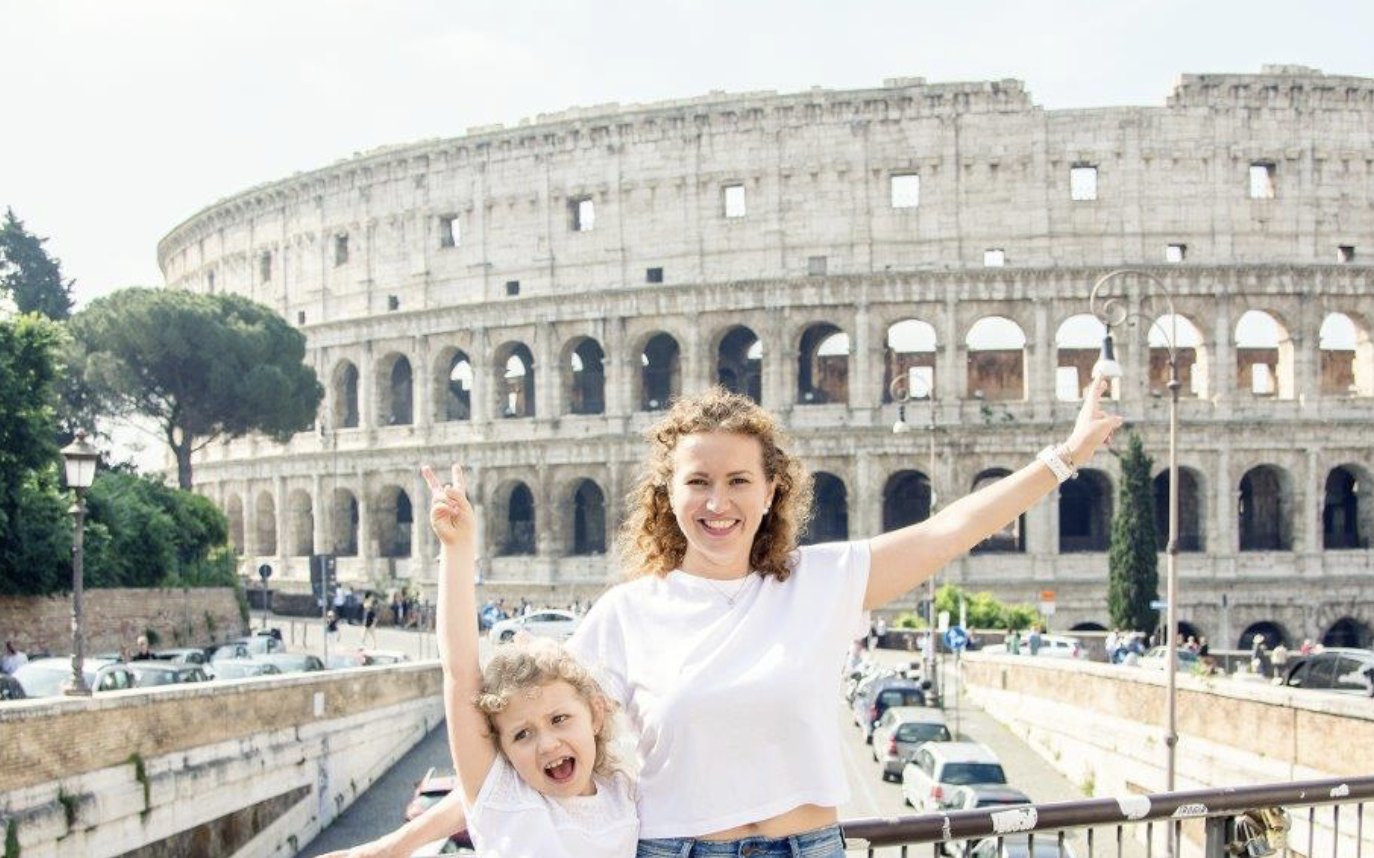
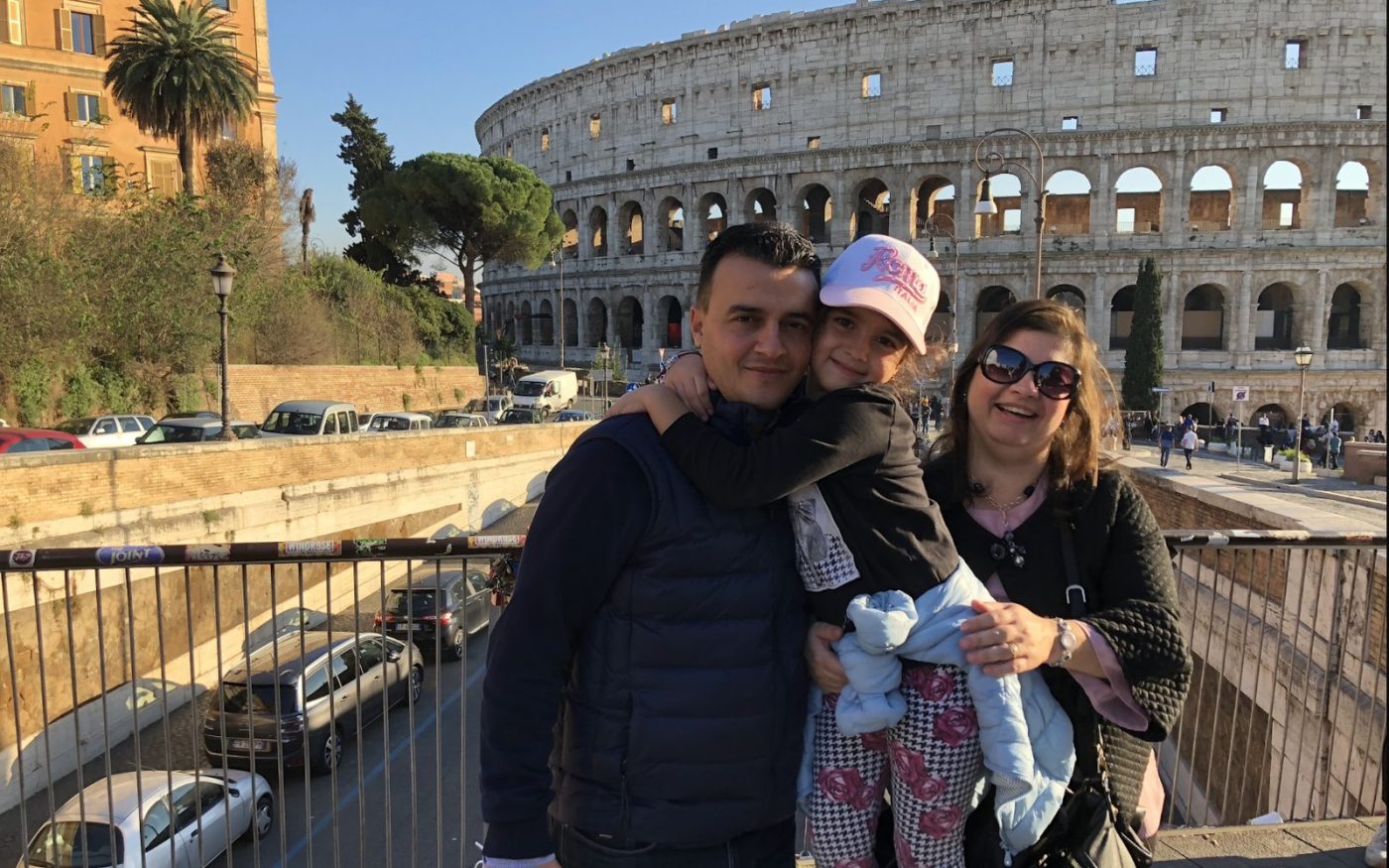
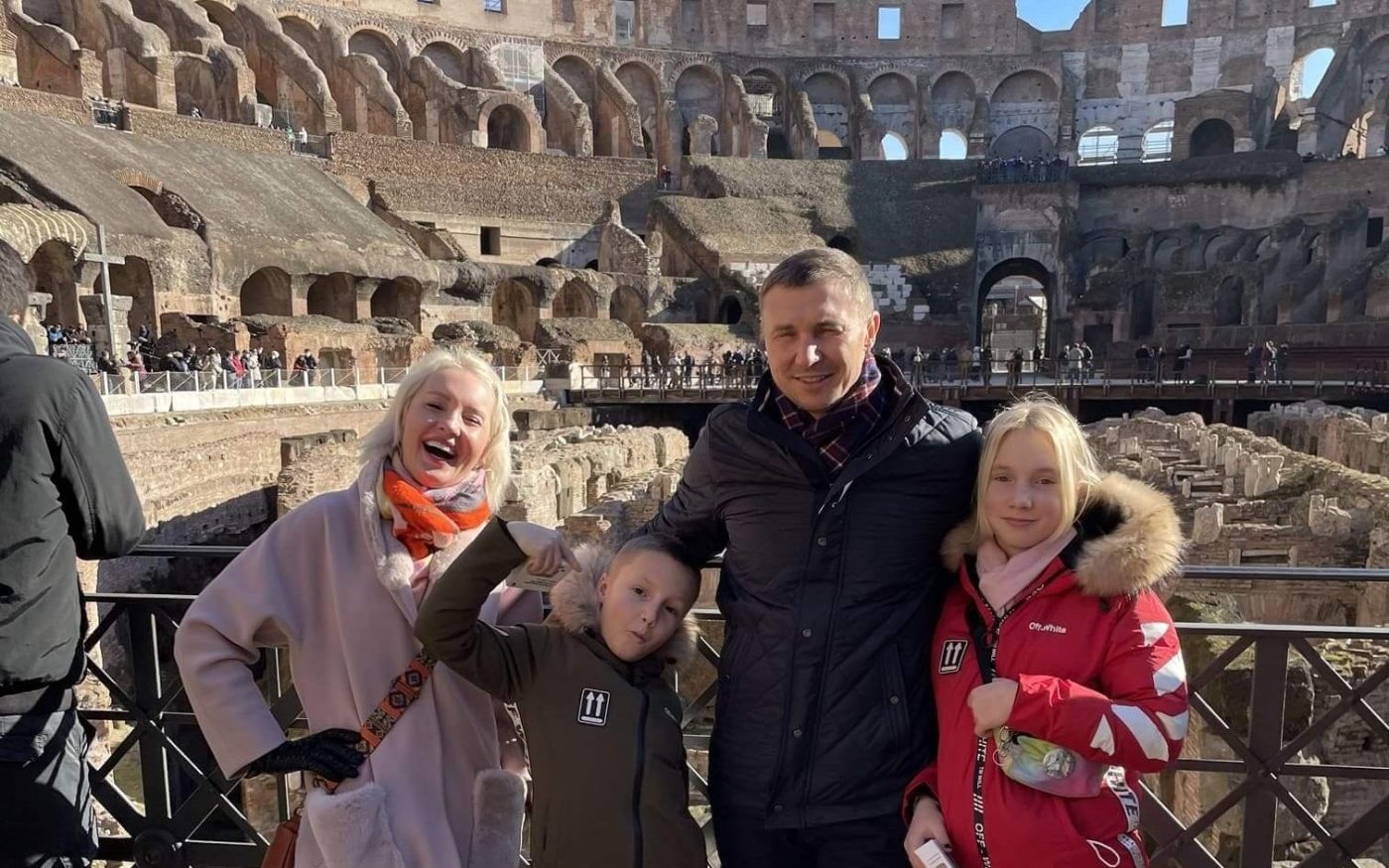
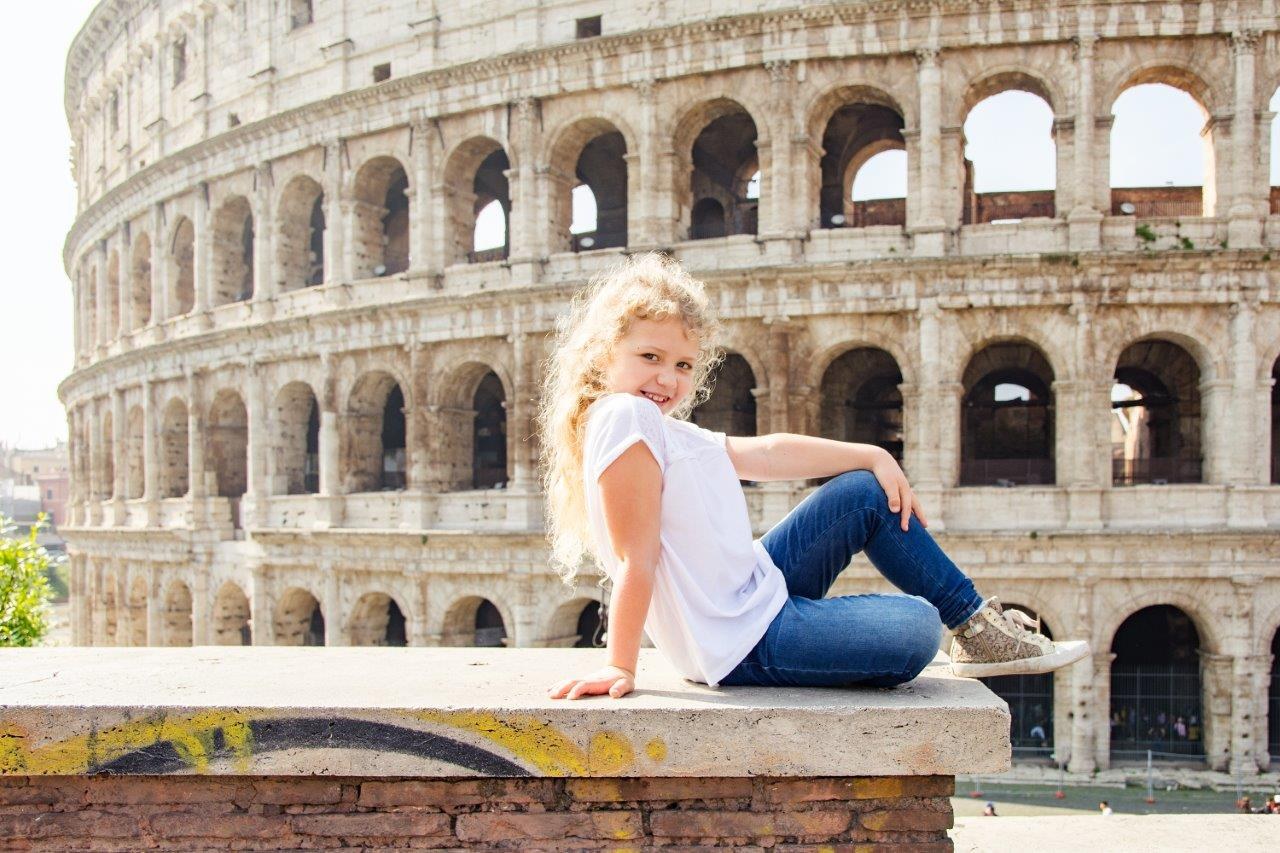 Colosseum & Ancient Rome Family Tour
Bring Ancient Rome to life. Uncover the secrets of the Colosseum and gladiators with engaging audio stories and interactive missions for the whole family.
€9
View Tour →
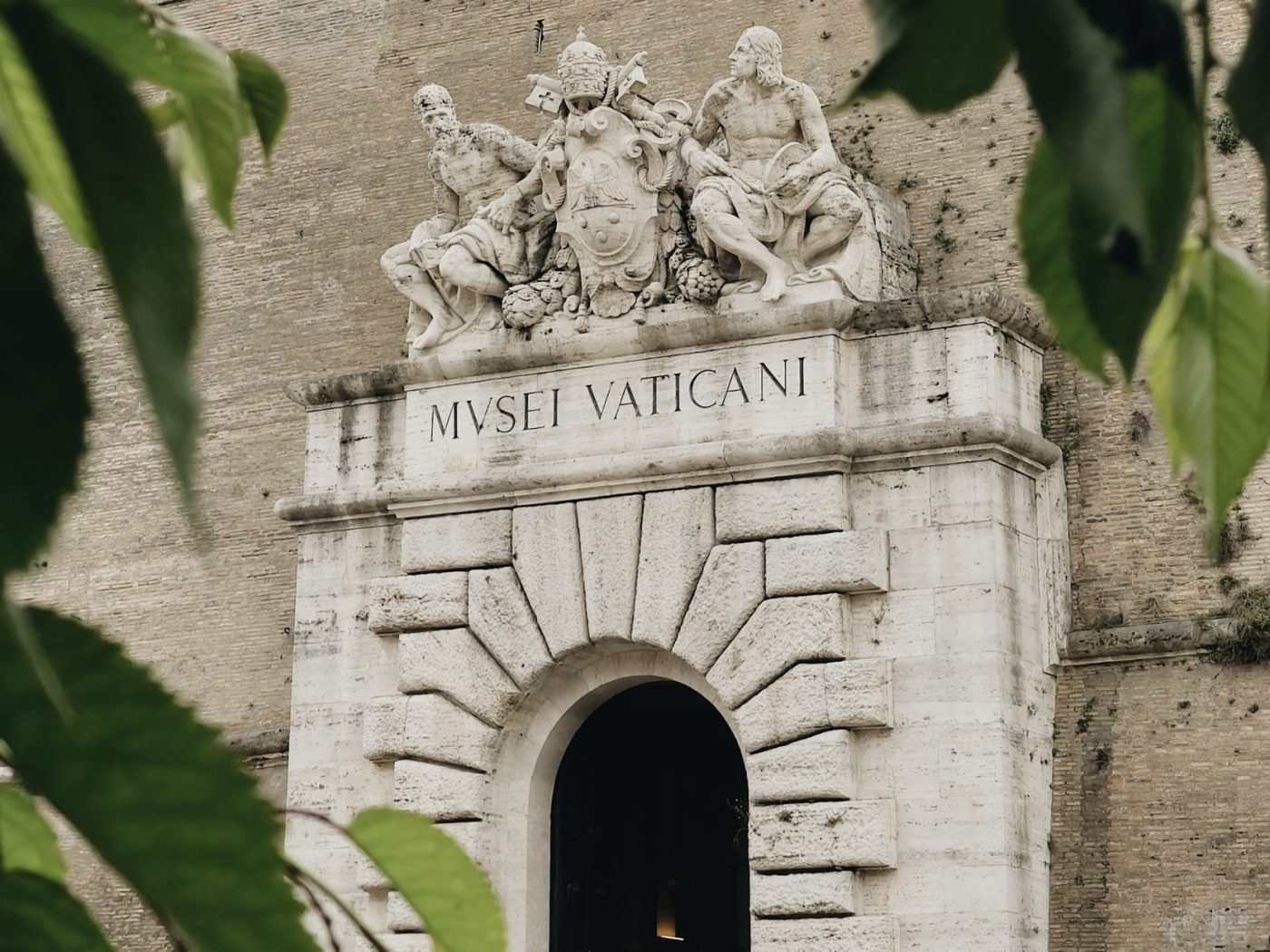
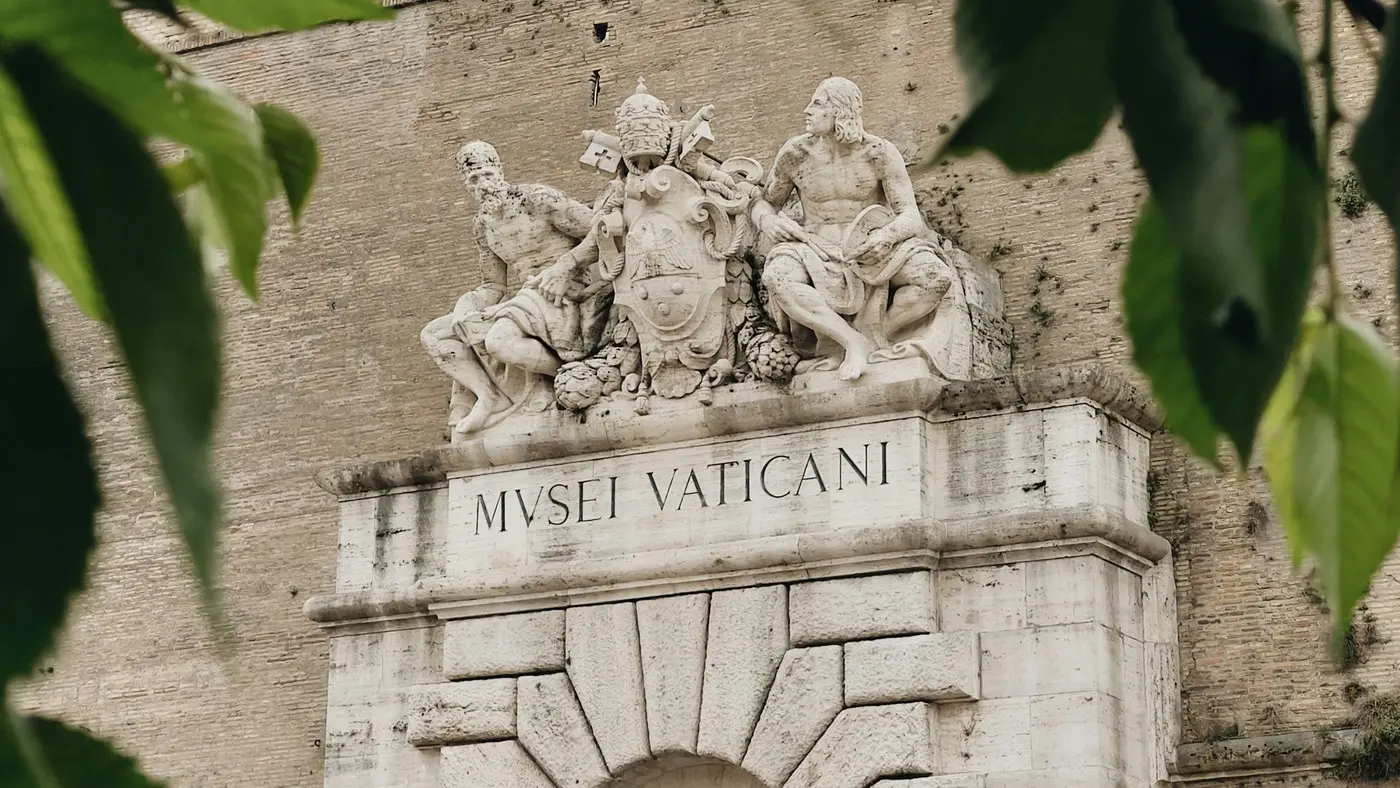 Vatican Museums for grown-ups
Follow Michelangelo through the Vatican Museums and solve his secret in the Sistine Chapel.
€9
View Tour →