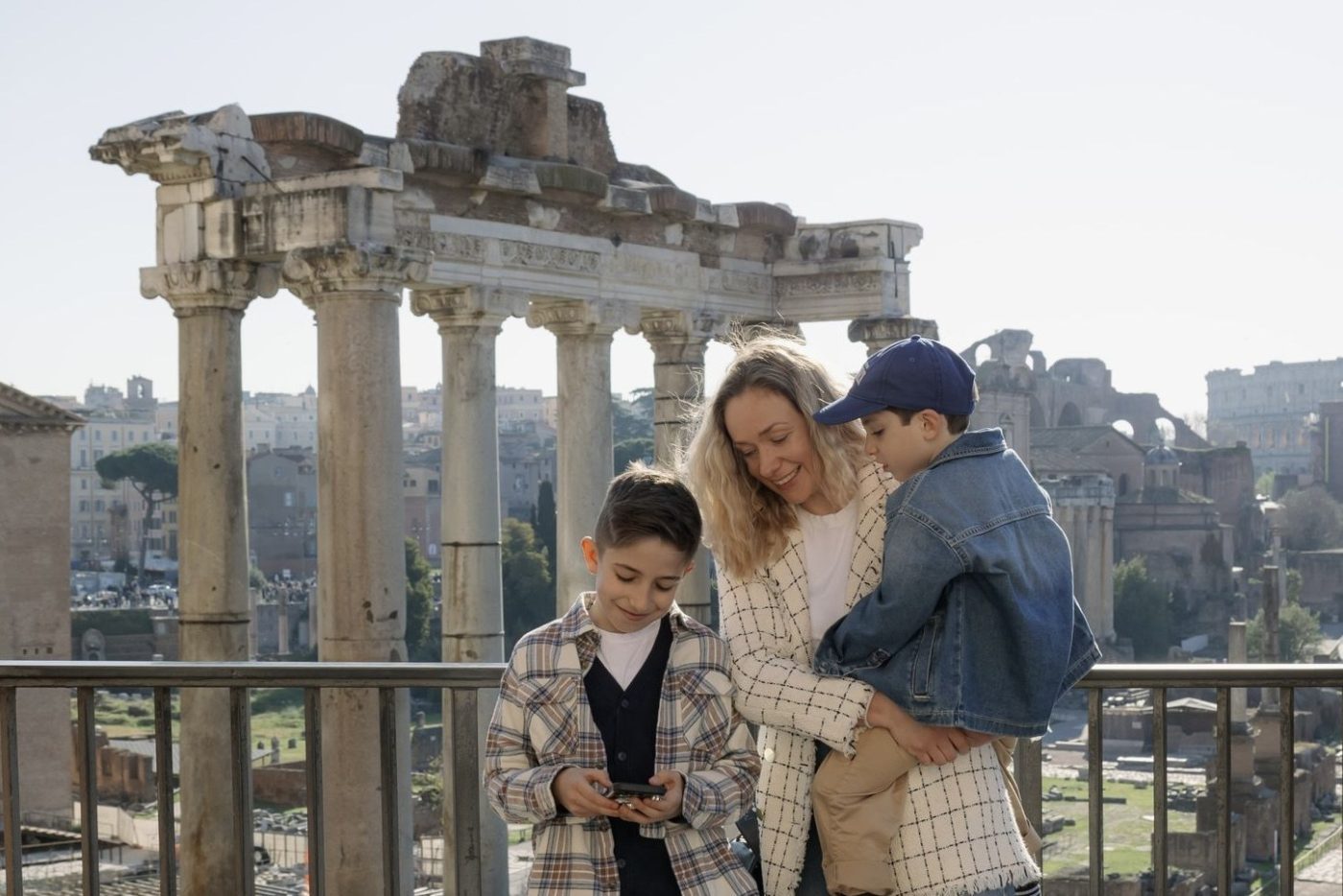
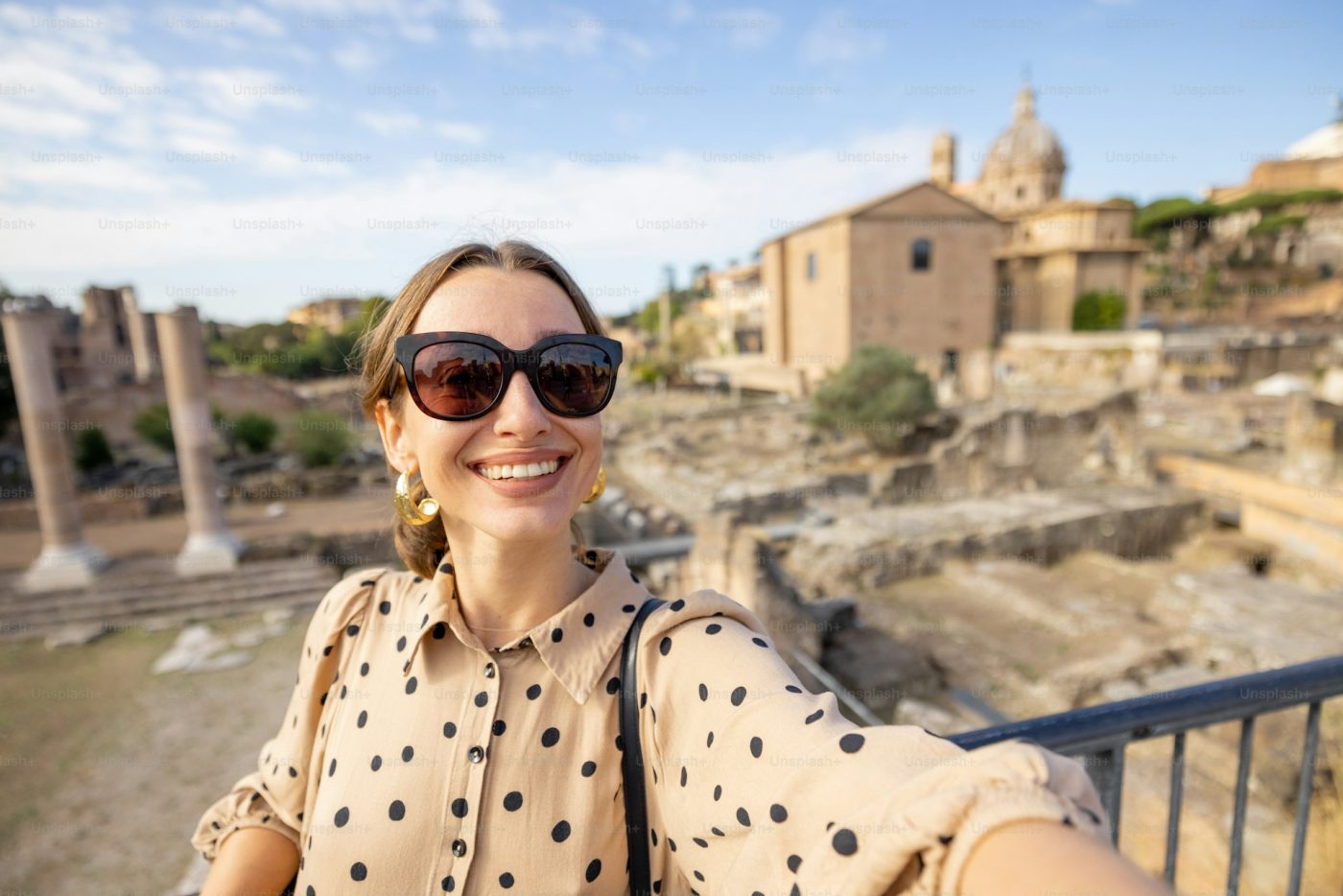
The classic disappointment of a family photo session in Rome looks like this: you are standing at the Trevi Fountain at two in the afternoon, three hundred people around you, the sun straight in your eyes, and the picture shows squinting children and somebody’s rucksack.
The location has almost nothing to do with it. In Rome it is the time that decides: the same place at seven in the morning and at two in the afternoon is two different cities. Below are ten locations sorted by time of day, two ready-made routes, and what you are not allowed to photograph in Rome.
Light matters more than location
Rome is a city of pale stone, and it behaves like a reflector. At midday that works against you: the light is flat, the shadows are hard, and tourists form a solid wall in the frame. Morning and evening turn the same stone warm and soft.
| Time | The light | What to shoot |
|---|---|---|
| Dawn and the first hour | Cool, soft, almost nobody about | St Peter’s Square, Trevi, the Colosseum |
| Before 10:00 | Warm and directional | The Spanish Steps, Campo de’ Fiori, Trastevere |
| Midday | Flat and harsh | Nothing. This is museum and ice-cream time |
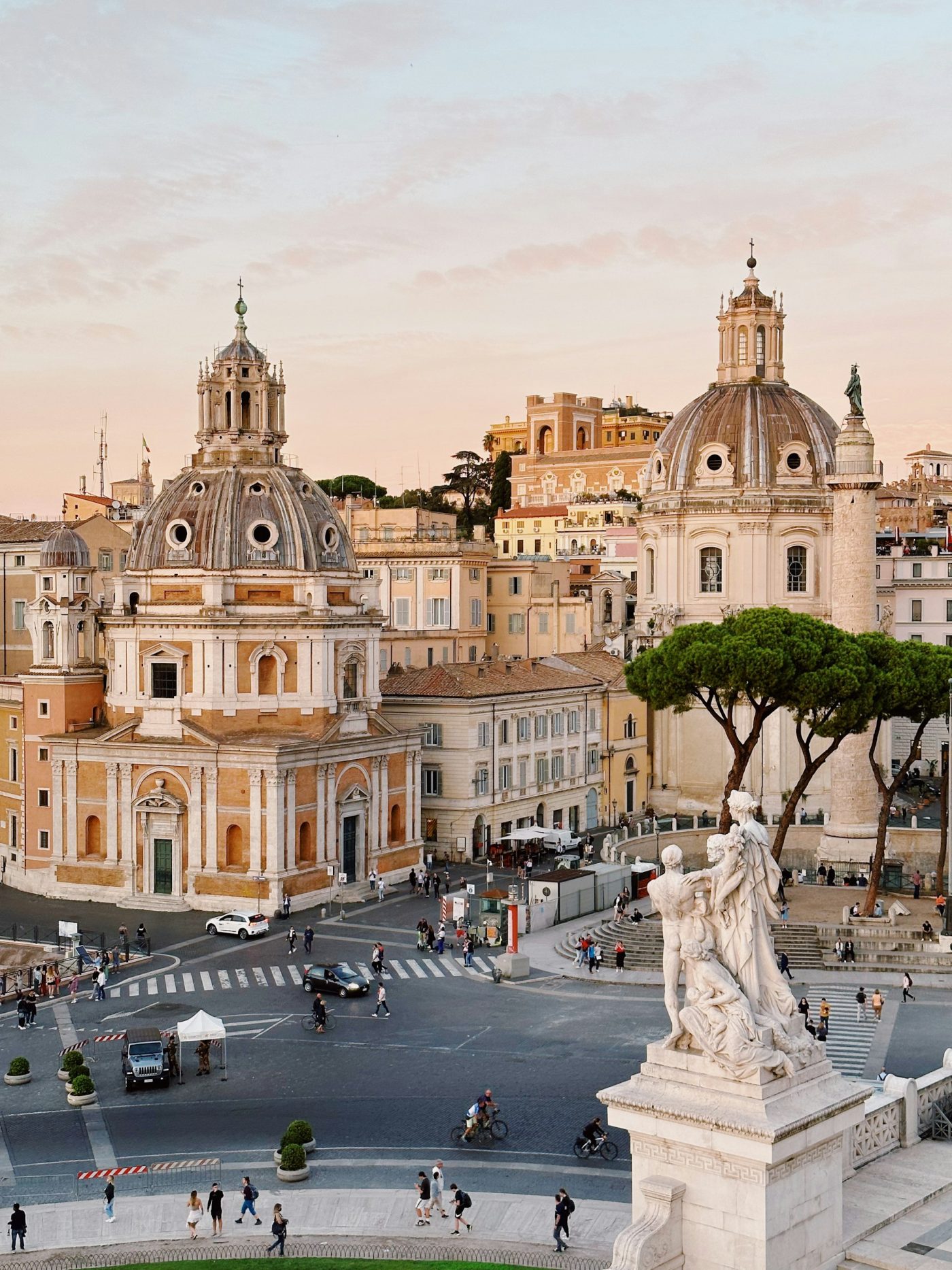
| The last hour before sunset | Golden, long shadows | The Orange Garden, the Pincio terrace, the Gianicolo |
| Half an hour after sunset | Blue, with the lights on | Navona, Trevi, the Colosseum lit up |
The practical conclusion: on one trip you can shoot three or four locations well. Ten, only badly.
Ten locations
1. St Peter’s Square at dawn
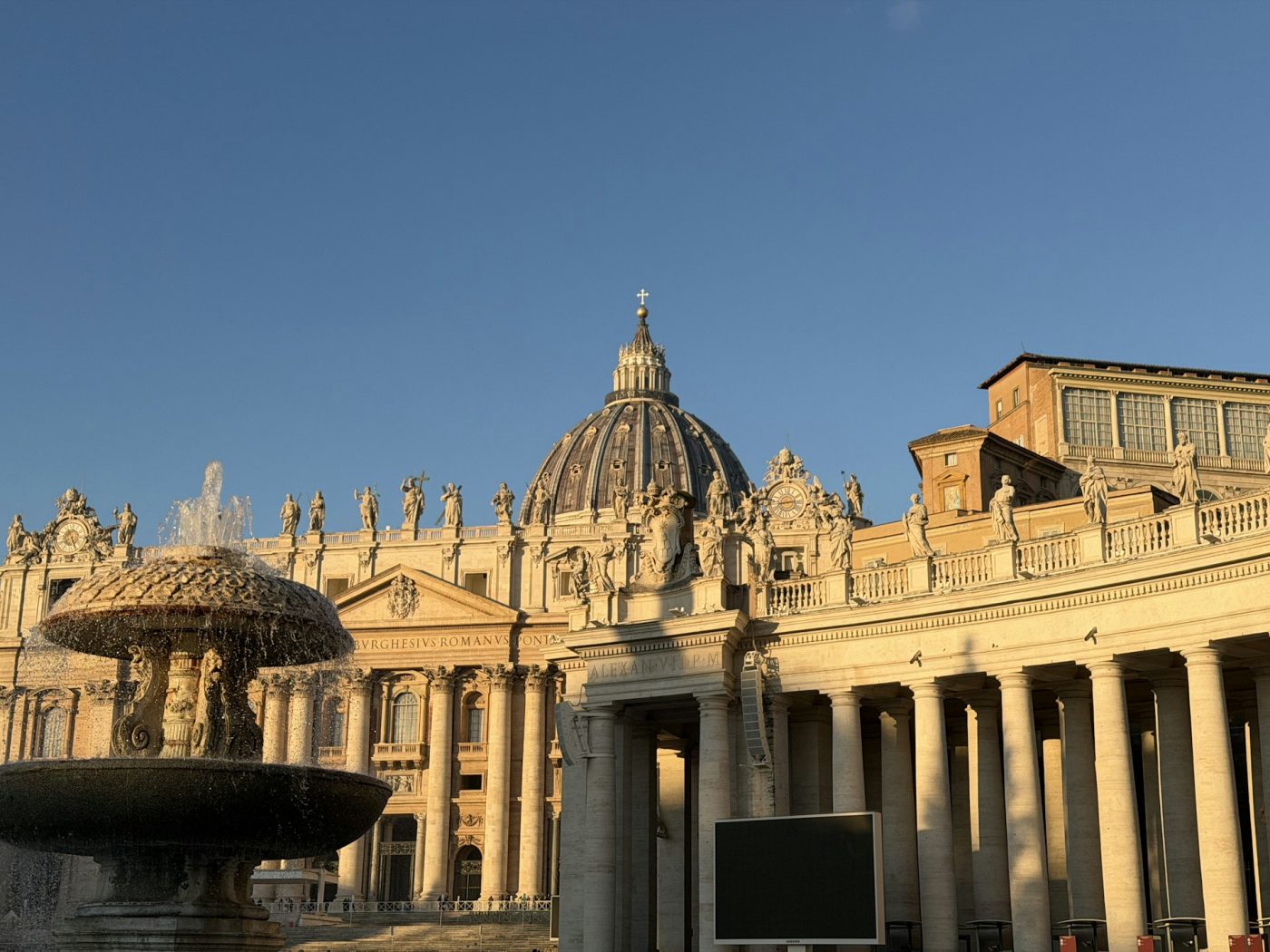
The city is still asleep, the square is empty, and golden light creeps slowly across Bernini’s colonnade. The children run between the columns — and this is the rare frame with not one tourist in it.
Bernini’s colonnade was built between 1656 and 1667 as an embrace of the Church. The obelisk at the centre was brought from Egypt by the emperor Caligula in AD 37 and stood in the Circus of Nero. It weighs as much as two hundred elephants, and it is the only obelisk in Rome that has never once fallen in two thousand years.
2. The Spanish Steps in the morning
In spring the steps fill with azaleas, and soft morning light turns the staircase into a glowing cascade. From above it looks like a pair of spread wings.
Important: sitting on the steps is prohibited and fines are issued. Shoot standing, or from the square below — the frame only benefits.
The staircase was built in the eighteenth century to connect the church of Trinità dei Monti with the Spanish embassy, and became famous after Roman Holiday.
3. Piazza Navona
At sunset the fountains turn into mirrors: painters work, musicians play, children chase soap bubbles. The square is pedestrian and flat, so it is easier with a pushchair than anywhere else.
The oval shape of the square is the shape of the Stadium of Domitian, which stood here in the first century. Bernini’s Fountain of the Four Rivers was finished in 1651, and the figure of the Nile covers its head: nobody then knew where the river’s source was.
4. The Trevi Fountain
At dawn, or after nine in the evening, the fountain is almost yours. The noise of water fills the square, a child throws a coin over their shoulder — and the frame takes itself.
Important: stepping into the fountain or sitting on its rim is not allowed and is enforced. Throwing a coin is both allowed and required.
The fountain was completed in 1762 at the end of the Aqua Virgo aqueduct, which has carried water since 19 BC. One coin means a return, two mean love, three mean a wedding.
5. The Colosseum framed by the Arch of Constantine
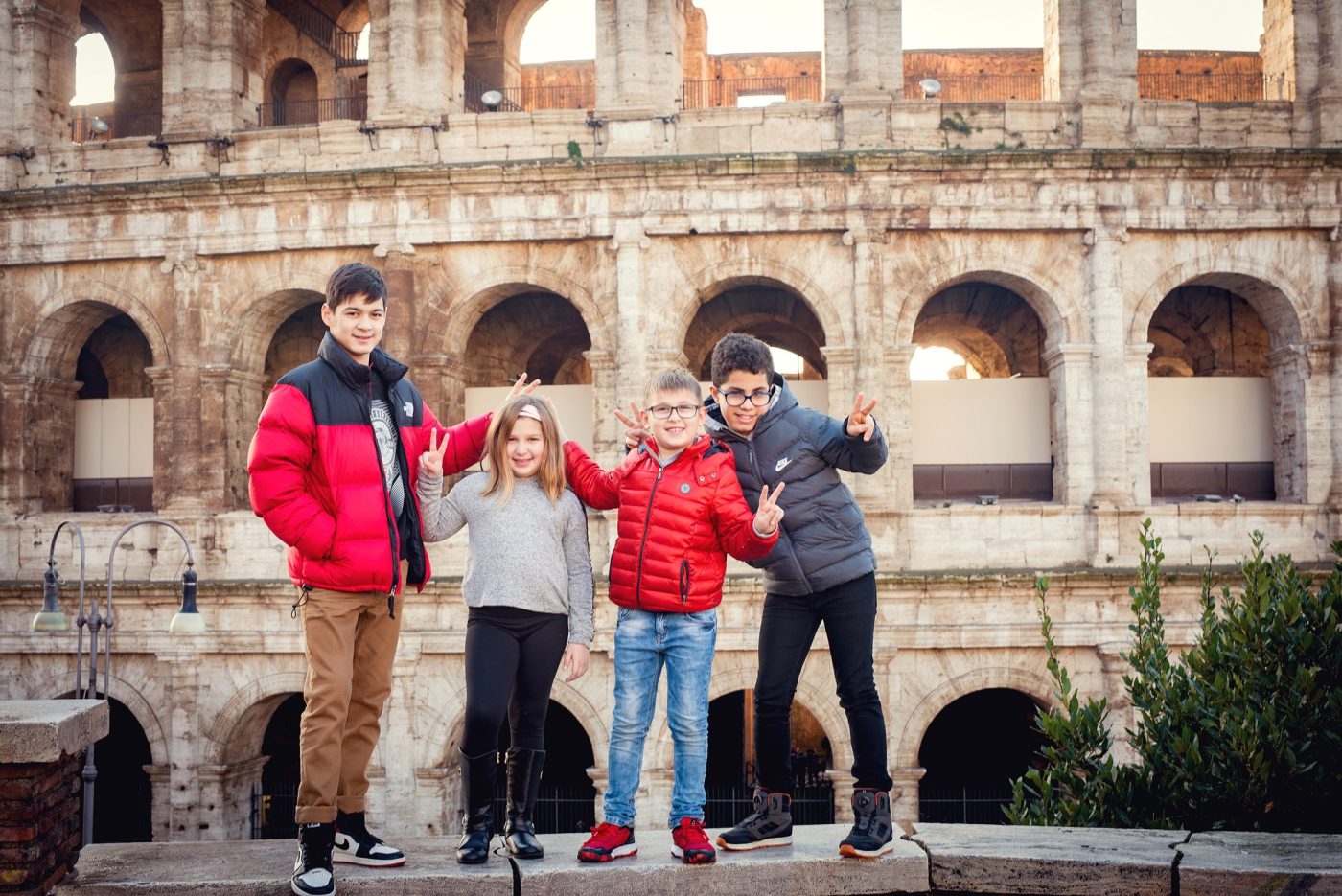
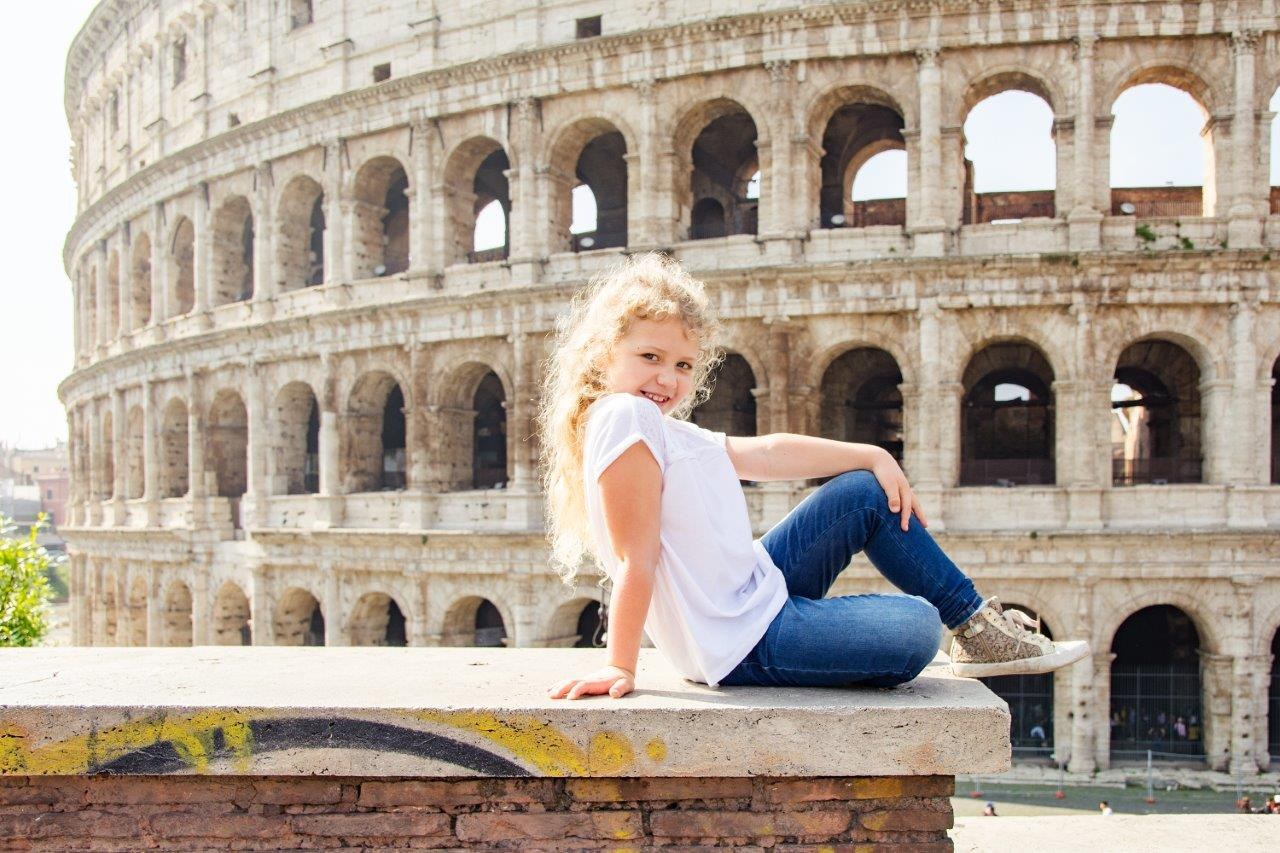
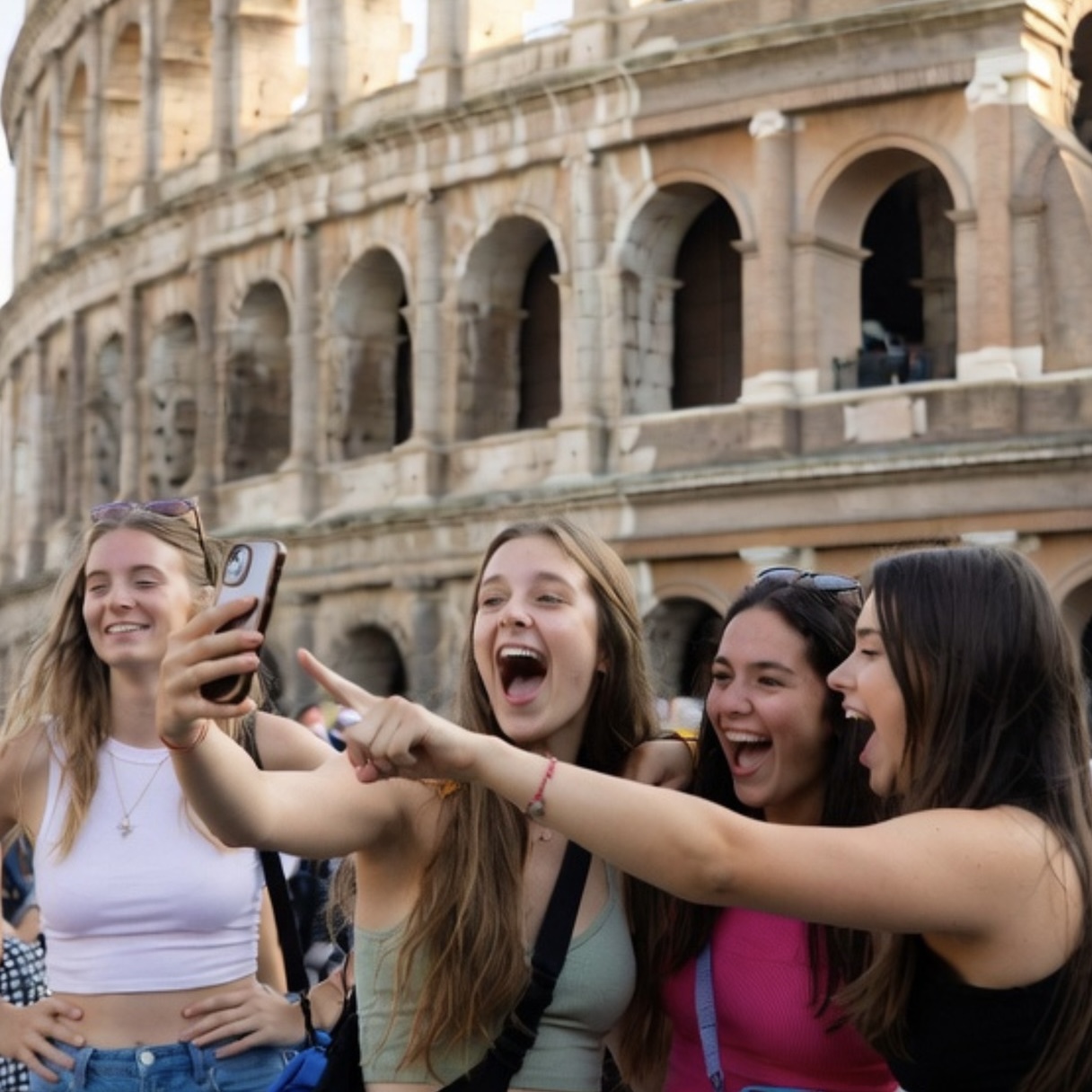
The best way to photograph the Colosseum without the crowds is to step back to the Arch of Constantine. It becomes the frame, and the amphitheatre — along with the people — moves into the background.
The Colosseum opened in AD 80 and held up to fifty thousand spectators, with a fabric awning stretched over the seating by sailors. The Arch of Constantine was raised in 315 to mark the victory over Maxentius.
6. The Orange Garden
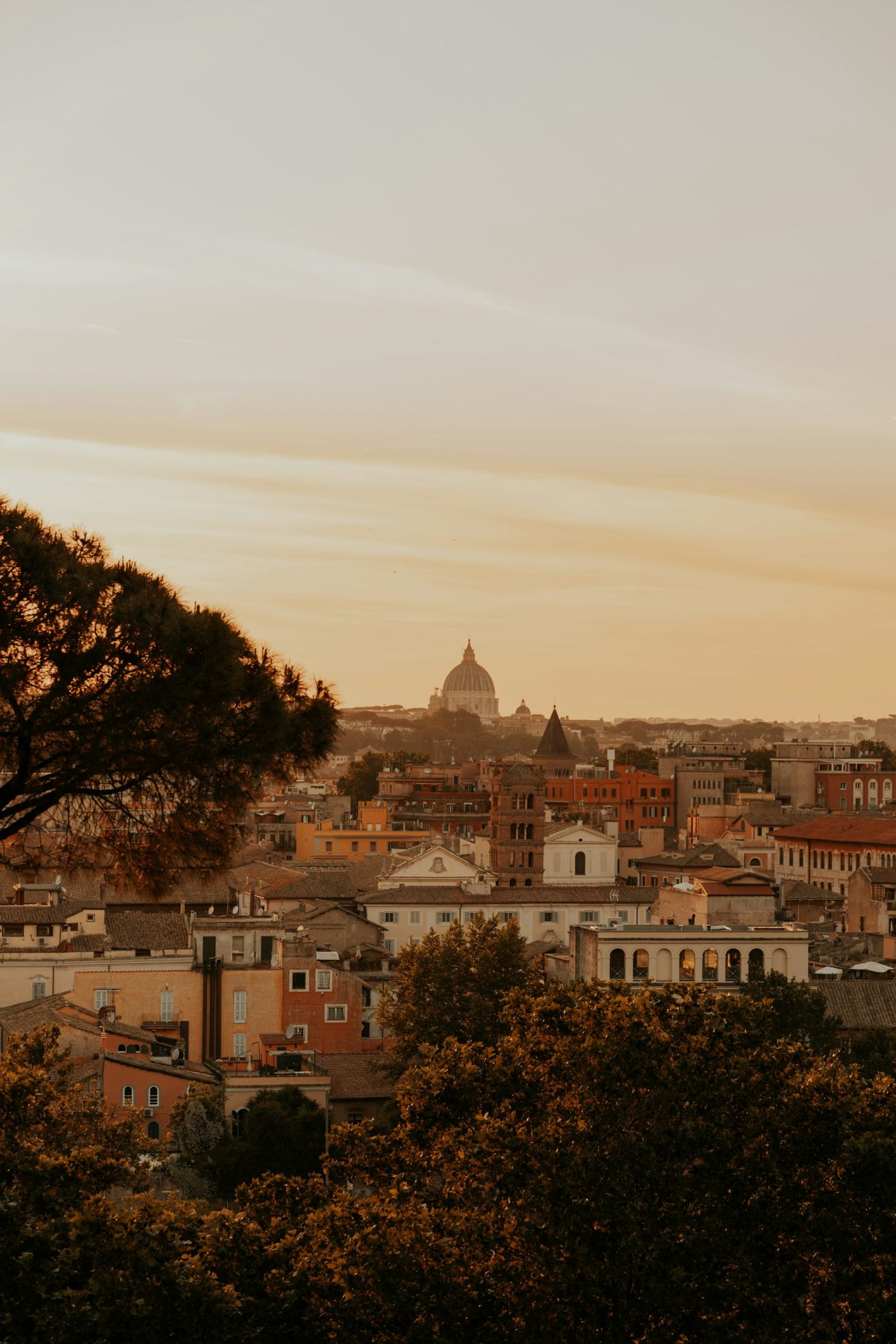
Children run under the orange trees while the adults look at the dome of St Peter’s in the sunset light. The garden is enclosed and quiet, almost secret — and it is the best sunset location in the city.
Legend says St Dominic planted the first orange tree here in the thirteenth century, and the garden still belongs to a Dominican monastery. A minute away is the famous keyhole through which you can see three states at once.
7. The Pincio terrace above Piazza del Popolo
The terrace looks out over Piazza del Popolo and the rooftops of Rome in the evening light. After the shot you can walk into the Villa Borghese park — hire, boats, the toy train.
The Borghese gardens were laid out in the seventeenth century as one family’s private villa. Today it is the city’s main park, and the best place to let children loose after a photo session.
8. Campo de’ Fiori in the morning
Morning light, fruit stalls, buckets of flowers and pumpkins that really are bigger than a child. The mood of an actual Roman morning rather than a postcard.
The name of the square means “field of flowers”. In 1600 the philosopher Giordano Bruno was executed here, and his statue stands at the centre. The market packs up by lunchtime, so come early.
9. The lanes of Trastevere
Cobbled streets, ivy on the shutters, melting ice cream in a hand. The liveliest frames come from here, because nobody is posing — everyone is simply walking.
This was once a working district, and it has kept its medieval street pattern. Many houses stand on ancient Roman foundations, and the name means “across the Tiber”.
10. The Gianicolo hill
The whole of Rome laid out below, quiet, and space to run while you wait for noon. At exactly twelve a cannon fires here — a blank round, purely for the sound, every day since 1847.
In 1849 the hill was a battlefield during the defence of Rome under Garibaldi. Today it is the finest panorama in the city, and a playground with a weekend puppet theatre besides.
Two routes: one morning and one evening
The locations are spread across the city, and shooting them in a random order means spending the day travelling. Here are two chains that work on foot.
| Route | Order | How long |
|---|---|---|
| Morning | St Peter’s Square at dawn → Trastevere → Campo de’ Fiori → Navona | 3–4 hours with breakfast |
| Evening | The Orange Garden at sunset → the Colosseum lit up → Trevi after nine | 2–3 hours with dinner |
The Spanish Steps and the Pincio terrace are next to each other and slot neatly into a third morning, while the Gianicolo takes a midday of its own because of the cannon.
How to photograph children who do not want to be photographed
“Stand there and smile” ends the same way for everyone. The opposite works: give the child something to do and shoot while they are doing it.
Count the columns, find an animal on the facade, race to the fountain, hold a pumpkin bigger than themselves, throw a coin. A year from now those are the frames you will look at, not the posed ones.
Second rule: shoot from behind and in profile. A frame of a child looking at the Colosseum is stronger than one of a child looking at the lens.
What is allowed and what is not
- On streets and squares photography for your own use is free, phone or ordinary camera.
- Sitting on the Spanish Steps is prohibited and fined. Entering the fountains is also prohibited.
- Museums each set their own rules: some ban tripods, some ban flash, and in the Sistine Chapel photography is banned outright. Check at the entrance.
- A tripod on public squares may formally require a permit if the shoot is commercial. For family photos a light monopod, or nothing, is enough.
- Drones over the historic centre are prohibited. Do not even try.
Where LooksArt helps
The problem with a photo walk is that children are bored between locations and unwilling to stand still once you arrive. LooksArt covers both: on the way they have a mission and puzzles, and on the spot they get a task — which is exactly what you should be photographing.
The first quest is free, the full one starts at €29 for the whole family, and it works offline.
A game for the children on the walk
While you choose the frame, the children need something to do. The most reliable is spot-the-difference: two nearly identical views of the same square, and eight small things that are not the same.
Frequently asked questions
What time of day is best for photos in Rome?
Sunrise and the last hour before sunset. Early morning leaves the squares almost empty and the light soft; at midday the sun is high, shadows are harsh and the crowds are in every frame. The blue hour after sunset suits the lit fountains.
Do we need a permit to take photos?
On the streets and squares, photography for your own use is free. Museums and enclosed sites each set their own rules — some ban tripods, some ban flash — so check at the entrance.
How do we photograph the Colosseum without the crowds?
Step back to the Arch of Constantine: it frames the shot and pushes the Colosseum, and the people, into the background. The other option is arriving before opening, while the amphitheatre is still empty.
Our child refuses to pose. What now?
Do not ask them to pose. Give them a task — count the columns, find an animal on the facade, race to the fountain — and shoot while they are busy. Those are the frames worth keeping.
How many spots can we realistically do in a day?
Three or four, with a break for food and rest in between. More than that and the day turns into a route march, and the children stop taking part.
Ready to turn a tour into an adventure?
Start with the free mission by the Colosseum. If you enjoy it, unlock the full tour, from €29 for the whole family.