Based on ten years of family tours — now available as LooksArt interactive tours.
What is genuinely hard about the Vatican with children
The Vatican is the hardest place in Rome for a family, and it helps to know exactly why. The museums are built as a one-way corridor: there is almost nowhere to turn off and catch your breath, and walking the whole thing adds up to some seven kilometres of galleries. About twenty thousand works are on display out of the seventy thousand held here; at a minute each you would need twelve years.
Add the dress code, the security check, a crowd that moves at its own pace, and a ban on touching everything worth touching. A child does not get tired of art. They get tired of not being allowed to do anything.
Everything that follows comes out of that: give the child something to do, go in the right order, and decide in advance what you are going to skip.
The route: what order to do it in
The commonest mistake is booking a museum slot for the middle of the day and hoping to reach the basilica afterwards. You will reach the basilica. The children will be long gone.
Two orders work, and the choice depends on the age of the children:
| Order | How it looks | Who it suits |
|---|---|---|
| Basilica first | At opening, while the museums are shut and the square is empty. Dome, roof, then a late breakfast — and the museums around midday | Children of 8 and up, if you want the dome climb |
| Museums first | The earliest slot, then straight from the Sistine Chapel into the basilica by the internal passage, then the square and gelato | Children under eight: do the hard part on fresh legs |
Timings: the square and the basilica take an hour to ninety minutes, the museums with the Sistine Chapel ninety minutes to two hours, the dome about an hour including queue and climb. All of it in one day with children under ten is a bad idea. Split it across two mornings and both will go well.
What to book and when to arrive
| What | How far ahead | What matters |
|---|---|---|
| Vatican Museums | 2–3 weeks | Timed entry. In summer the queue without a booking is over an hour in the sun |
| The dome | on the day | Ticket at the basilica entrance; the lift to the terrace is charged separately |
| Vatican Gardens | in advance | Guided tour with a reservation only, no independent access |
| The basilica | not needed | Free entry, but the security queue can be long |
The best times are before 9:30 in the morning or after 15:00. And most importantly: the museums are closed on Sundays, except the last Sunday of the month, when entry is free. That is exactly why it is the most crowded day there — with children it is the worst day of the month to go.
Fifteen stops that work with children
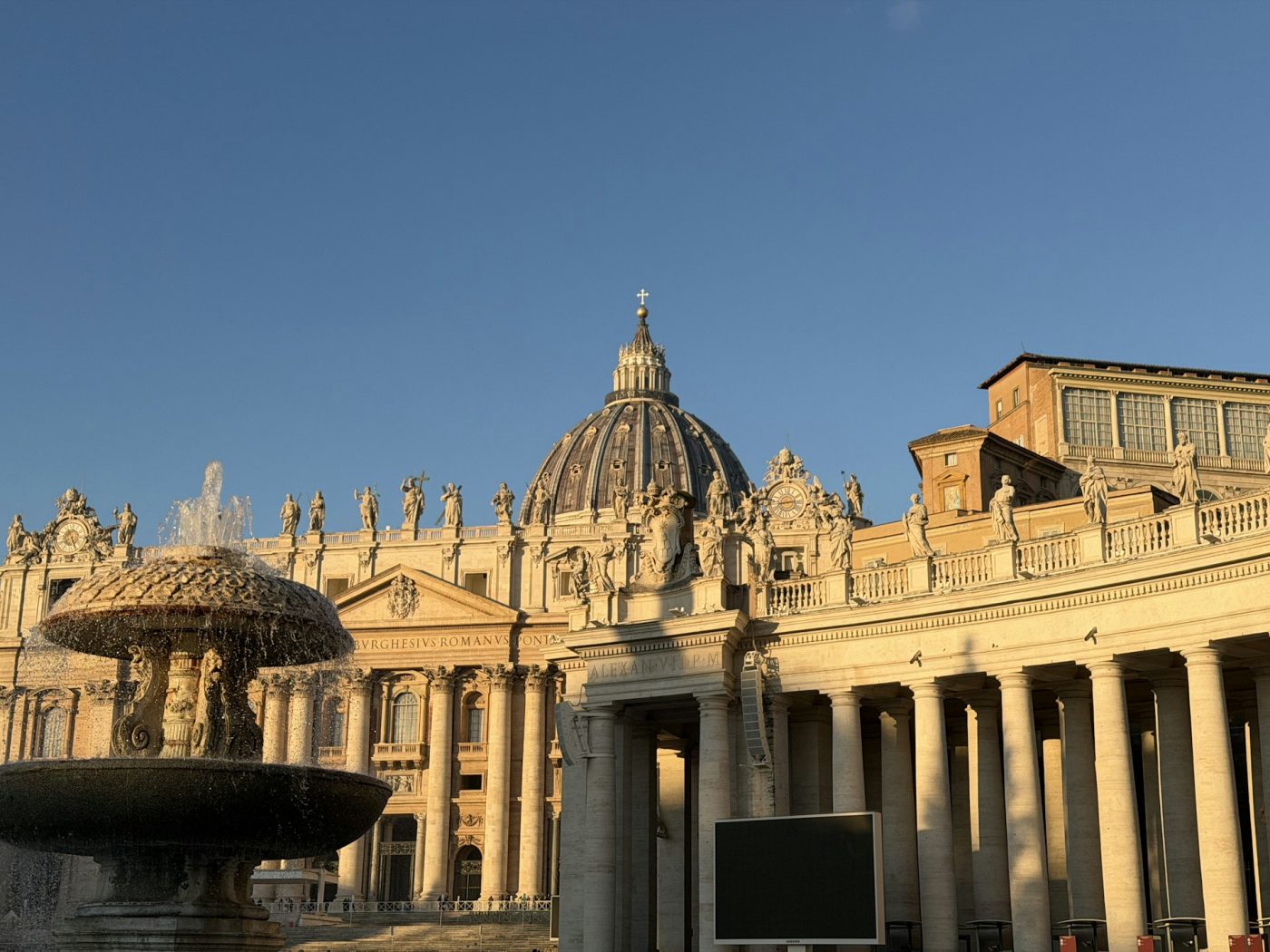
1. St Peter’s Square
Bernini’s colonnade takes in the square with two great arms — that was the intention, an embrace of the Church. At the centre stands an Egyptian obelisk that once stood in the Circus of Nero.
A task while you take in the facade: find five statues holding objects, and work out which of them has no halo.
2. The colonnade illusion
Two round marble discs are set into the pavement on either side of the obelisk. Stand exactly on one and the four rows of columns collapse into a single row. Step aside and the illusion falls apart.
It is not magic but geometry: the columns are set on radii from that point. Children like this more than half the rooms inside, and it takes five minutes and costs nothing.
3. St Peter’s Basilica
The largest church in the world: laid end to end its naves would run longer than two football pitches. Michelangelo’s Pietà is here, behind glass, and you cannot get closer — worth mentioning before you go in.
Entry is free but the security queue is unpredictable. Before nine in the morning is the calmest hour of the day.
4. Bernini’s baldachin
A bronze structure over the altar as tall as a nine-storey building. The bronze, by tradition, was taken from the Pantheon on the orders of Pope Urban VIII, of the Barberini family.
A task: find the bees. There are many on the baldachin, and they are the Barberini crest — a family that signed the basilica in a way nobody could rub out.
5. Michelangelo’s dome
Five hundred and fifty-one steps to the very top. A lift takes you to the roof terrace, but after that it is on foot, and the final stretch runs in a narrow passage between the two shells of the dome: the wall leans with you, and that is the part everyone remembers.
No pushchairs. Not advisable with children under six either: there is no turning back in that passage.
6. The entrance to the Vatican Museums
This is where the one-way corridor begins. Agree the rules with the children before you go in: where the pause will be, where photos are allowed, how much is left. Negotiating inside works less well.
A task for the first minutes: find the crossed keys. It is the Vatican crest, and it will turn up dozens of times after that.
7. Laocoön and his sons
A priest and his two sons fighting sea serpents. The statue was found in 1506 and struck Michelangelo immediately.
Tell the story before your child sees the marble: then it is a plot rather than a frightening scene. Afterwards, try holding the pose of Laocoön as a family — it never fails.
8. The Pinecone Courtyard
An enormous bronze pine cone that once decorated a Roman fountain, and beside it Arnaldo Pomodoro’s Sphere within a Sphere, a golden globe that looks cracked open from inside.
The courtyard is open air, and it is the only place in the museums where you can sit down and breathe. Plan the pause here, not for “when we get tired”.
9. The Gallery of Maps
A hundred and twenty metres of painted walls — longer than a football pitch. The maps show the Italian regions of the sixteenth century, and they do not always match modern borders.
A task: find the dragon on the maps. It is there, and hunting for it beats reading the labels.
10. The Raphael Rooms
Painted between 1508 and 1524. Raphael put himself into the School of Athens, and children find him faster than adults do if you hint at a young man looking straight out at us.
A task: find the two philosophers shaking hands.
11. The Sistine Chapel
More than three hundred figures on the ceiling. Michelangelo complained he had almost gone blind painting them, and he hid his own face in the Last Judgement.
Photographs are not allowed here and silence is requested. Warn the children beforehand: being told off by a guard spoils the visit more than tiredness does. Five minutes, heads tilted back and one question agreed in advance work better than trying to explain everything at once.
12. The Swiss Guard
The smallest army in the world, in service since 1506. The uniform draws on Renaissance dress; it was not invented for tourists.
A task: count how many colours are on a guard’s uniform. The answer usually surprises children and parents alike.
13. The Vatican post office
From here you can send a postcard “from another country” without leaving Rome: its own stamps, its own postmark.
It is the best possible end to the day. The child writes a postcard to themselves, signs it “mission complete”, and receives it at home a couple of weeks later, when the trip already feels long ago.
14. The Vatican Gardens
They take up half the territory of the city state and some of the trees are over two hundred years old. Access is by guided tour with a reservation only.
If the day is full enough without them, skip them without regret. This is an addition for a second visit, not a compulsory stop.
15. The view from the basilica roof
The terrace at the base of the dome is what the lift ticket is really for. From here you see the whole square, the colonnade from above and a corner of the gardens you cannot otherwise reach.
A task: spot the marble disc you were standing on this morning.
What you can safely skip
Nobody writes about this, and they should: a large share of Vatican fatigue comes from rooms children do not need at all.
- The Pinacoteca. The painting gallery. Fascinating for adults, not for a seven to ten-year-old.
- The Egyptian and Etruscan museums. Good in themselves, but forty extra minutes if you are not there for them specifically.
- The carriage pavilion. Long and repetitive.
- The collection of modern religious art. It sits immediately before the Sistine Chapel, by which point energy has usually run out. Walk straight through.
Skipping them does not mean not seeing the Vatican. It means reaching the Sistine Chapel with children who can still take something in.
Dress code, toilets, pushchairs: short answers
- Dress code. Shoulders and knees covered, children included. In summer a light scarf in your bag settles it faster than an argument at the door.
- Security. Arrive half an hour before your slot. Large bags and rucksacks have to be checked in.
- Toilets. There are several along the museum route, but the ones near the Sistine Chapel have a queue. Go early rather than when you have to.
- Pushchair. The route is narrow and one-way, and the dome is out of the question with one. A carrier is easier.
- Food. You cannot really eat inside. A snack before you go in and ice cream afterwards is the working pattern.
- Water. Bring a bottle: there are places to refill on the square and in the Pinecone Courtyard.
Where LooksArt helps
The Vatican is exactly the case where an audio guide does not save you. It talks, and what the child needs is to do something.
LooksArt is built differently: an interactive tour drawn from ten years of real Vatican tours. We know where children stop in wonder, where they start to fade, and where the parents need a coffee. Animated guides turn the rooms into chapters of a story, the puzzles attach to what is in front of you right now, and short notes for parents give you something to answer the inevitable “but why”.
You go at your own pace: stop, take a photo, eat a gelato, carry on. The first quest is free, the full one starts at €29 for the whole family, and the app works offline.
If the day falls apart
Sometimes you do everything right and the child sits down on the floor of the Gallery of Maps and will not move. That is not a failure and not a reason to push.
Leave. Outside there is the square, ice cream, and Castel Sant’Angelo twenty minutes away on foot — a real castle with a ramp, hidden passages and a terrace where you can run and talk loudly. Half the Vatican walked with interest is worth more than all of it walked under pressure.
Frequently asked questions
What age should children be for the Vatican?
From six or seven, provided you turn the visit into a game with tasks. Without one even a ten-year-old struggles: there are many rooms and one after another they blur into a single long corridor.
What is the dress code for children?
Shoulders and knees must be covered, and that applies to children too. In summer a light scarf in your bag is easier than an argument at the entrance.
How long does a visit take?
Two to three hours, and it is better split into two or three blocks with breaks. Basilica, museums and Sistine Chapel back to back with no pause is a reliable way to end the day early.
Is the dome climb worth it with children?
There are 551 steps to the top. A lift covers part of the way to the terrace, but after that it is on foot through a narrow passage between the shells of the dome. Not possible with toddlers or a pushchair.
Do we need to book in advance?
Yes, at least a couple of weeks ahead and earlier in high season. Before 9:30 in the morning and after 15:00 are the calmest slots.
Ready to turn a tour into an adventure?
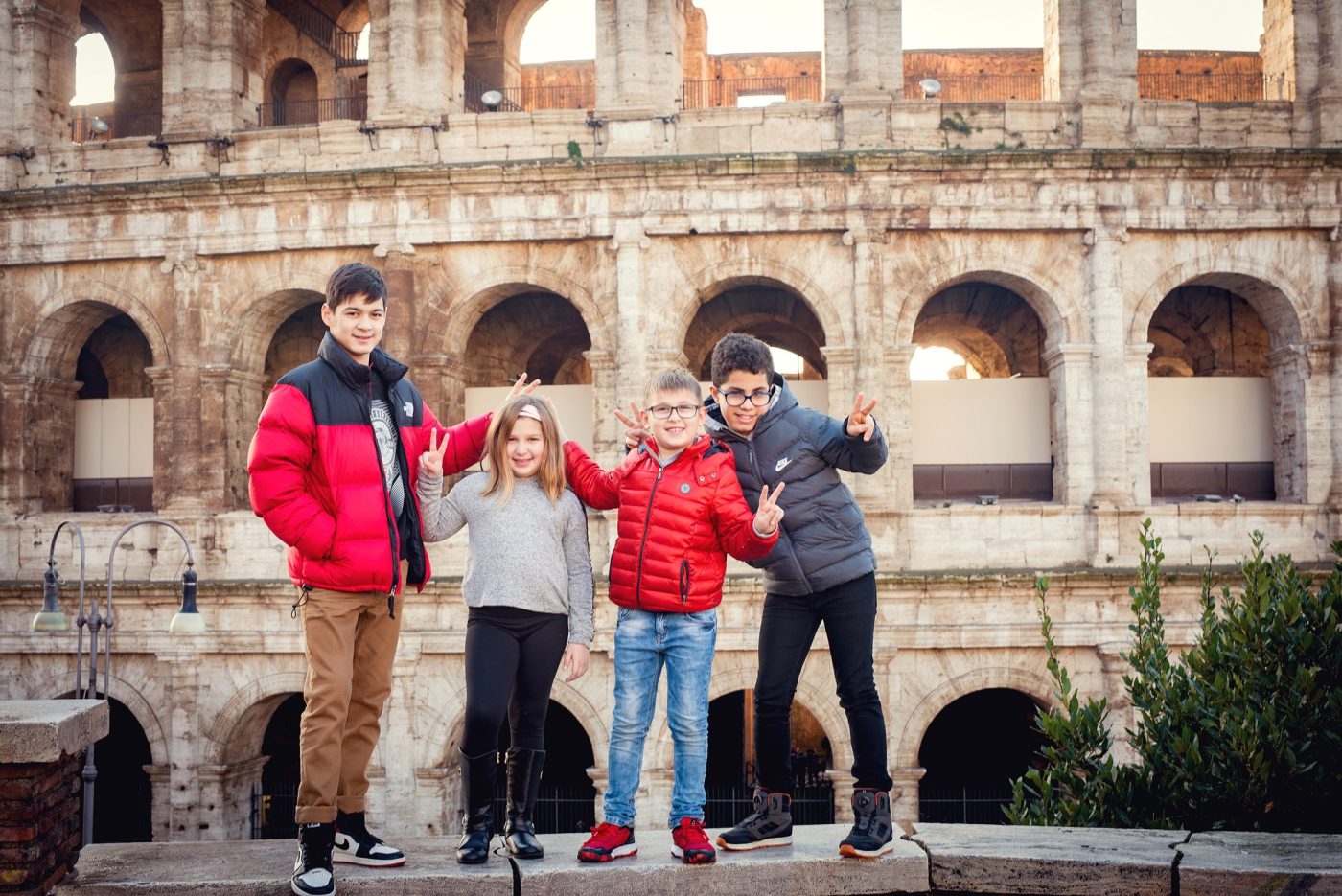
Start with the free mission by the Colosseum. If you enjoy it, unlock the full tour, from €29 for the whole family.